

June
August
The water flows on the Bitterroot are lower than they have been in years. “Hoot-Owl” restrictions have been in place for a while and if you are going to fish the Bitterroot, please respect the trout and their habitat. There are a lot of anglers, guides, and the general public concerned about the condition and of the river and how it affects the trout. In this report I will be educating you on the complexities of the river and will be giving you both good and bad news. Without Painted Rocks Reservoir on the top end of the West Fork, the river would be basically dry, so thankfully we have the ability to release cold water during these low water times. The Bitterroot Mountains had one of the lowest snowpacks in the state and the valley has heavy irrigation and water demand. Water has been related to gold, especially during drought years. Painted Rocks only has so much water that can be released and they can usually release water for about 45 days or so. So a couple weeks ago that is what happened. The West Fork at Conner is actually the water volume from the Dam and as you can see, 260 CFS is being released and is much higher than the median. This is some cold water and can be below 55 degrees. Ok so lets head downstream to Darby. This is flowing at 375 only 50 CFS below the median. The amazing thing to look at is the temperature swing this section has. Diurnal shifts of over 10 degrees sometimes. The next graph we can look at is Bell Crossing. Usually the river gains water with all the tributaries adding to the flow, but the irrigation ditches that supply the valley with important water takes a big bite out of the flows. Then we go down to the lower river near Missoula where the drought is very evident. The river is about 500 CFS lower than the average, wow that is the lowest I have ever seen it in my 22 years on the river! The lower water also makes it easier for the river to heat up quicker and is still going over 70 degrees this week, but certainly much better than the 76 degree water we had during the heat wave a couple weeks ago. My criticism to water managers is they should not allow people to suck water out of the river to water their lawns! Grass is not more important than trout! So what does all this mean? Well first I would like to write a quote from the Fisheries Biologist in Hamilton, Chris Clancy, here is what he recently said at a public meeting in Hamilton:
You are probably aware that FWP has imposed “hoot owl” fishing for the entire Bitterroot River mainstem. These regulations are most often related to elevated water temperatures. The criteria for the restriction are met when the water temperature reaches 73 degrees F for 3 consecutive days. Those criteria have been met in the Bitterroot River at Missoula and Hamilton, hence the restriction to that point. In the guidelines, restrictions can be applied more broadly for species of special concern or concerns about shifting angling pressure onto sensitive waters. So, even though the temperature target is not met in the upper river, we extended the restriction to the confluence of the East and West Forks. The East and West Forks themselves are not affected by the restriction.
We have floated the lower West Fork and Bitterroot River 3 times in the past 2 weeks, looking for dead fish. We have found more in the mainstem than in the West Fork. We found 36 dead fish total. Of the trout, about ¾ are westslope cutthroat. They make up about ¼ of the population of trout in the river up there, so they appear to be more sensitive to angler induced mortality (we assume these are release mortality). One question that I cannot answer is how many dead fish does the 36 we saw represent? Dead fish generally are not very conspicuous and don’t stay around in the stream very long if they are.
In my business, during these times I will not and have not fished the Bitterroot with my customers. I focus on larger rivers, tailwaters, and have even guided for some warm water fish like bass and pike. There are guides and outfitters in my field that are concentrated on the Upper Bitterroot and now that the West Fork is the only section that one can fish past noon, I fear that there is too much pressure on these sensitive cutthroat waters. I like to leave it alone and apparently there has been some mortality from anglers and that is no fun! If you are aware that the upper river has a healthy population of cutthroat and at this time of year many of the hits can be from smaller 4-6 inch trout, so barbless flies are a must if you do choose to fish up there. The river can be fished responsibly, but anglers need to be aware of pressure, water temperatures, and health of the trout. So what is the good news?
The good news is we are almost to August 15, which is my date for when the cool nights start some of our early fall hatches like tricos and Hecubas. We need some beneficial rain, but my observations of trout in the middle and main river is that they are doing fine and have made it thru the worst. There was certainly some mortality as the river dropped and trout can even get trapped in areas where they become vulnerable to predators and warm water. The Bitterroot is a large fluvial basin that connects to the groundwater table in many areas. Trout are resilient and can survive the droughts by surviving in these areas. There is what I call the “bath tub effect.” If you set your bathtub at a low trickle it will fill up and then trickle out the other end. There are essentially bath tubs in the river. Nice trout survive in these along with the whitefish and suckers. Unfortunately, they are near impossible to catch in these areas, but that does protect them and assures that we will have a healthy brute stock of trout for the future. There are some areas you can fish and be responsible, but please be aware of the conditions and the pressure. I want to conclude by saying to my fellow outfitters and guides that sometimes never leave the Upper Bitterroot, please respect the resource and don’t abuse it. Good fishing is around the corner, but we need some beneficial rain! Thank You and good luck and pray for rain.
July Bitterroot Fly Fishing Report
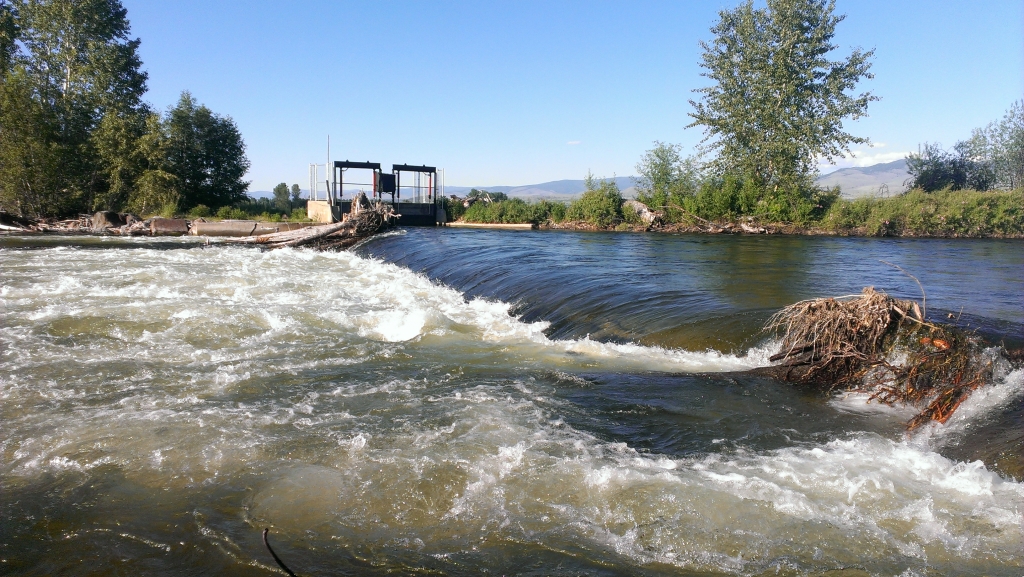
The Bitterroot was fishing very well in the heat, but after 3 days and record temperatures the fishing got tough very fast. This is a direct result of overnight air temperatures over 60 degrees and the water temperatures climbed up quickly. The upper river remains to stay cool and the flows are dropping fast. If you look at the Darby Graph you can see that the river has dropped to 830 CFS from over 1200 CFS in just 5 days. The heat is diminishing our remaining snowpack and irrigation has increased in the recent heat wave. There are certain gauging stations that have river temperature readings which can be helpful and educational to monitor at this time of year. The diurnal swing of the upper river is impressive and understanding water temperature fluctuations at this time of year can be benefit your experience on the river. Look at the temperature graph at Darby. The temperature swing is 10 degrees during the course of the day! The water temperature on the upper river is one of the safest for trout survival in the west compared to the lower Bitterroot, Clark Fork, and Blackfoot Rivers. The warm nights we had that were over 60 degrees during the heat wave shot up the water temperatures over 70 degrees on the mid and lower Bitterroot sections for 3 days in a row and caused the fishing to go from great to poor quickly. The gauging station near Missoula has a water temperature graph and you can see this water temperature trend. But there is good news, just one night at 52 degrees has dropped the water temperature to 66 degrees, but will probably climb up to close to 70 by the end of the day. With daytime highs only reaching in the 80s and nightime lows in the low 50s, the river will recover from this terrible heat wave. Having a water thermometer and being aware of water temperatures is important to understand because you really should not be fishing when the water temperature reaches 7o degrees. This heat wave really changed the fishing quickly. The fishing was good and trout were even comfortable cruising around in eddies and backwaters, but this stagnant water heats up fast and the trout have moved into faster water and are seeking oxygen from heavier water and ground water springs. This time of year produces some good hatches. The stoneflies love the sun and they have been mating and hatching every day. There are many different stoneflies that hatch at this time of year. There are yellow sallies, large goldens, little chartreuse/lime stones, and the prolific Bitterroot stone. The trout look for these steaks when the conditions are right. There are also drakes, mostly spinners now and pale morning duns. I have been fishing stonefly patterns and mayfly patterns, sometimes at the same time. It can be beneficial to dissect a good seam with parachute patterns, especially the widely used purple parachute adams. Look for trout in swifter water because the water temperatures have the trout moving into these areas to take in more oxygen. The West Fork has cooler water and the stonefly and mayfly fishing is consistent. It is harder now to find trout over 16 inches, but a lighter rod and having fun with the dry fly action can be entertaining. Keep an eye on the water temperatures and use the knowledge I have given you to determine your best strategy at this time of year. The water temperatures should drop with cooler nightime temperatures and do your best rain dance because a cool front can make our fishing great again. I want to leave you with a picture of the diversion dam in the Woodside to Tucker water. This dam has taken the life of a 6 year old girl and has almost taken the lives of several others in the last couple weeks. There are huge signs now that mark where to pull over and be aware of this danger. I was responsible for some of the signs a few years ago by informing FWP that this dam has become a serious threat to even the professionals on the water. But these signs were not as big as the ones that are there now and hopefully with more awareness, people can be more respectful of the power and dangers of the Bitterroot River! The Bitterroot is no place for tubers and novice rowers! Make sure you are aware of the dangers in the river because the river is not as safe as it appears at the access sites. Good luck and be safe on the river!
June 2013 Bitterroot Fly Fishing Report
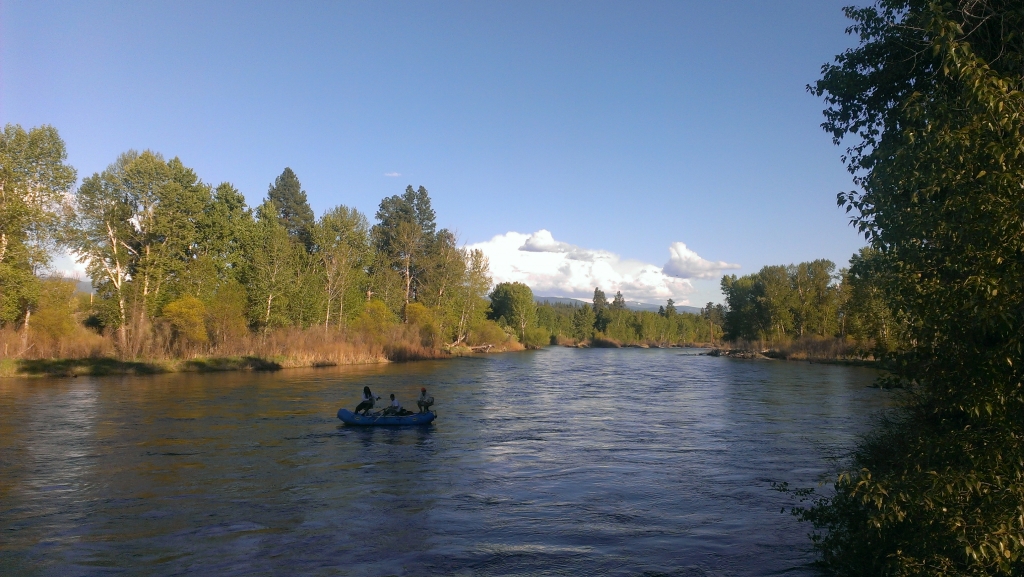
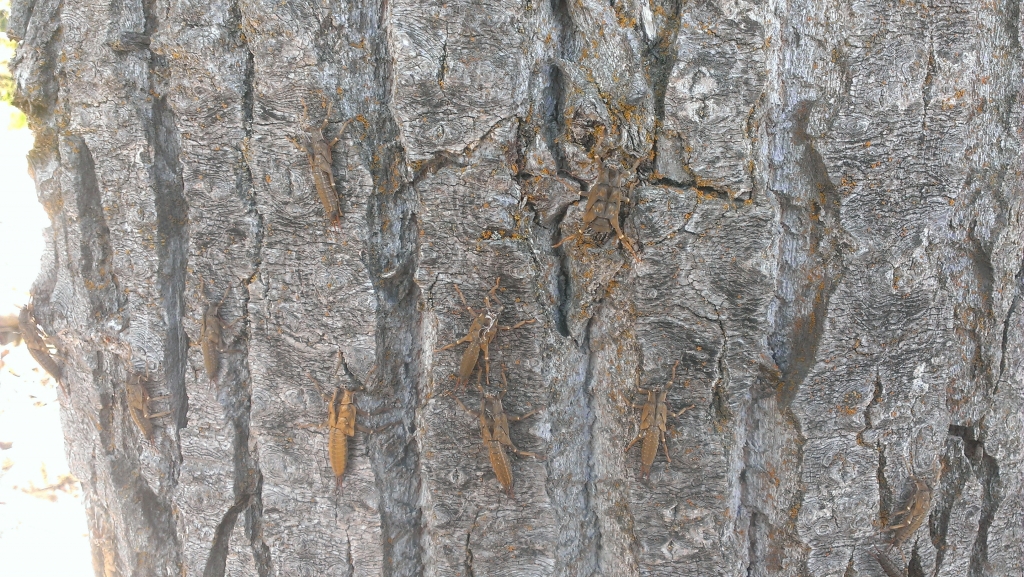
I first want to apologize to those of you that read my report for not keeping up with them. I have had some personal issues that have kept me from focusing on my business. But I am back. What an exciting time of year. Normally there is just a report on the Upper river because the rest of the river is too high, but this is a different year. I have seen conditions like this over the years and the stage is set for some great fishing in the next few weeks. There are wide open options on fishing the entire Bitterroot right now. The photo on the left are some anglers that braved the higher waters of the lower river. The challenge is higher when venturing into the middle or lower river, but the river is looking good. I even saw a few yellow sallies and caddis out down by Florence, which is really rare for this time of year. The Bitterroot is a complex river to understand, especially in the braided middle sections and the swollen lower sections. It can be fun fishing side channels and trying to figure out the new features scoured by the runoff. To catch fish successfully on the sections below Hamilton, the dry fly bite will mostly be in just the right spots and the subsurface game is your best bet. This can be a fun time to see if the streamer bite is on, but droppers or indicators with stonefly, mayfly, and caddis patterns is a good tactic. The photo on the right is what I have deamed the mystery Salmon Fly hatch over the years. Located only several miles above Anglers Roost, this tree seems to have an abundance of Salmon fly shucks every year. So this reveals that the hatches are definitely on the rise. The Upper river is going to be really heating up with this weather. As I have said before, stoneflies are photophilic They love the sun, so with that said it is safe to say that I think the Salmon fly hatch and goldens will be in full force soon with this weather. As I have said Salmon flies hatch all the way to Hamilton, but they have already done so and there is a waiting period before the goldens and drakes really get goin, but it can happen fast with sunshine and heat, you just have to keep checking.
May 1, 2013 Bitterroot Fly Fishing Report
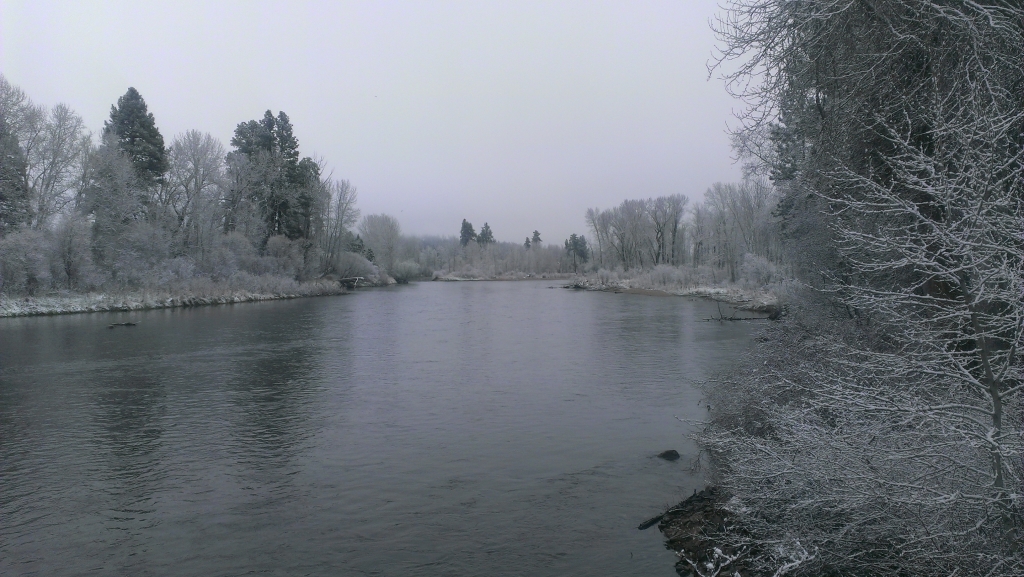
You can see that May 1st has a surprise cold and snow! The good news is that this can create incredible spring conditions by stabilizing and even dropping flows. Any sustained run off is good right now because the snowpack in the Bitterroots is weak. If you look at the flows they can tell you that the river wants to rise, which it will next week, but for now there are some great conditions. The Darby flows are almost half of the median and beautiful! The middle river at Bell Crossing is around 1200 CFS and wants to be around 2000! The lower river near Missoula is around 2300 CFS and wants to be over 3000 CFS! That is exactly is what is going to happen by next week, the river is going to work towards those median flows and things will be still fishable but tougher. I am certainly going to do some fishing on the Root in this next warm weather system because the trout will be happy! There have been some great caddis hatches and the sunny weather system will get these bugs buzzing all over the river. Trout love caddis, they chase them as they try and erratically hatch and they look for them on the water. The drake hatch is out and today in the cooler 50 degree weather will have a burst of them around 2 PM, but sometimes this hatch is short so you have to be in the right water and get after it when these sailboats start their regatta. There are trout doing there thing spawning and some are done and looking to regain their water and energy by looking for any food available. May can be a very exciting month to hit the Bitterroot, and sometimes with no one around because skwala spring fling is over. The river will rise with the next heat wave, but there are several good fishing days coming up. The meat of the run off still wont occur until we get 3 or more days in the 80s so keep an eye on the flows and you can be surprised in May with some very good fishing. There are still stoneflies around, but they dominant hatches are definitely mayflies and caddis. Scanning with skwalas is still a possibility, but parachutes and caddis patterns are your best dry fly go to patterns. There are a lot of trout looking for drakes and caddis emerging, so droppers and nymphs are great options to trick these sub surface feeders. In these bigger flows light tippet is not necessary and presentation becomes your best friend. So work on those reach casts (aerial mends) and parachute casts (creating slack on the cast for a good drift). The changing flows always present tricky situations in the irrigation dams and log jams so please use caution when floating and wading. Good Luck!
April 18, 2013
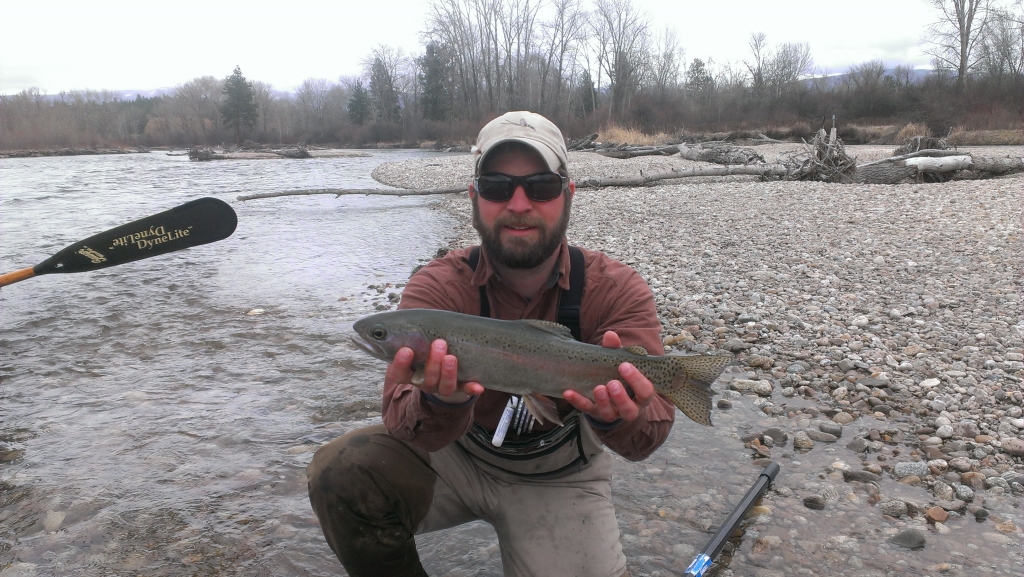
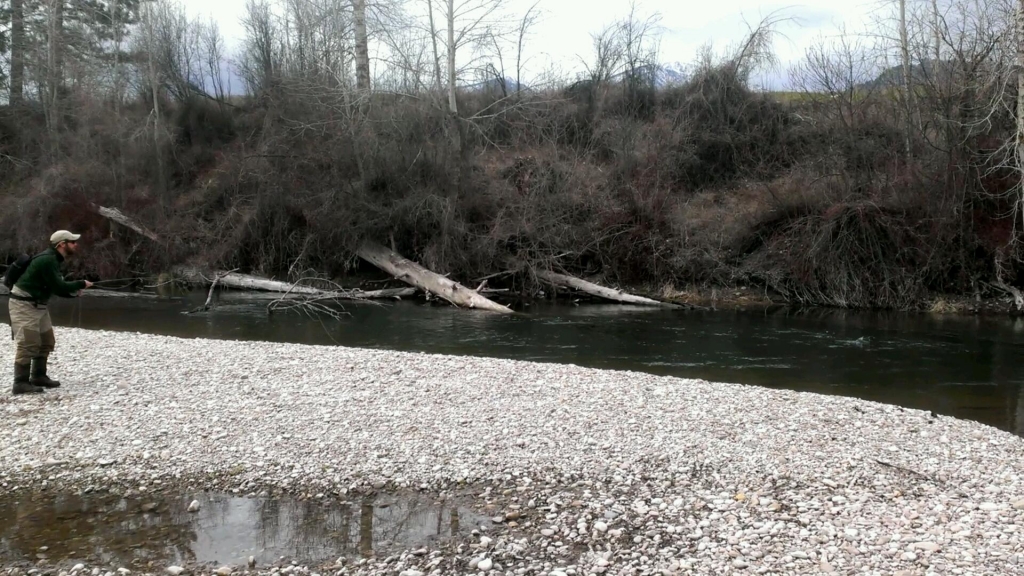
The Bitterroot has very different dynamics and substrate from the upper river to the lower river. These diversities can cause huge differences in hatches and productivity. The upper stretches above and through Hamilton have more substrate for stoneflies and can often have prolific mayfly hatches that can be very different from the middle, and especially lower river sections. The upper sections have more trout per mile due to the great abundance of more cutthroat that can be sustained with higher insect species diversity index. On the other hand, the middle and lower section are larger fluvial basins with larger trout than the upper river. The trout count is not as high, but your chances of that trophy goes up. There have been many days that I try and fish the lower river in hopes of that trophy and there are not many hatches or rising trout and then I talk to someone else who fished the upper river that experienced a prolific hatch and had targets to cast to. This is what I think is going on right now, but may change with the warming trend later this week. We are in a huge low pressure producing very cold temperatures and Hamilton even has a freeze warning for tonight and temps may even reach the teen! That is not good for fishing early in the day, but the prime afternoon windows may produce some good action. With the 10 day forecast showing milder temps this weekend, I am expecting the river to fish very well, especially when the nightime temperatures are above freezing. I have been doing some outings with my friends and family during the afternoons and the lower river near Florence does not have a lot hatching, and the warming trend might cause more hatches. I see some March Browns and more Blue Wings, but not many rises. The hatches on the upper river have been more consistent. So what is hatching and what tactics should you look to us?
This is a great time of year because there can be a wide variety of hatches. There are skwalas, march browns, baetis, midges, and the famous Ameletus Gray Drake coming soon! I think there are more skwalas hatching now than before the low elevation run off and if there is nothing hatching, scanning with a skwala can be your best bet. The most abundant and predictable hatches right now are the Blue Wings and the March Browns, especially when the milder weather and cloud cover comes later this week. When I am throwing skwalas in these flows, I rarely use 4X, like most guides and anglers. There may be a situation in a side channel or back water that requires lighter tippet, but if there is one piece of advice I can give you, it is to try and use heavier tippet to give yourself a chance at a trophy that has more power and determination in these flows. 3X is good and I will even throw some 2X, they cant see the line, especially with good presentation. The options are all there, you can nymph, streamer, or dry fly. I you are going to streamer fish, dont spend to much time in one spot or before you leave a run you have been dry fly fishing, try a few throws with a streamer. There are lots of mayfly nymphs moving around so classic nymphs like pheasant tails and copper johns can work. If you want to be predictable like some of my competitors, try the worm, they do work, but for some reason not quite as fun for me. The classic debate I have heard for over 20 years is whether it is a March Brown (Rithrogena) or a Gray Drake (Ameletus). Well I will try and give my personal opinion from my research and observations. March Browns have “mottled wings,” and the Drakes have “slate wings.” I will not go into more detail than that for now and give you something to google or investigate yourself. I have not seen the Drakes yet, but I am expecting them soon. Lastly I will give everyone fair warning, the irrigation dams are big and the river has power so be safe and make sure you know what you are doing out there. This is the season I see and hear about dangerous situations so be careful out there. Good luck!
April 4, 2013
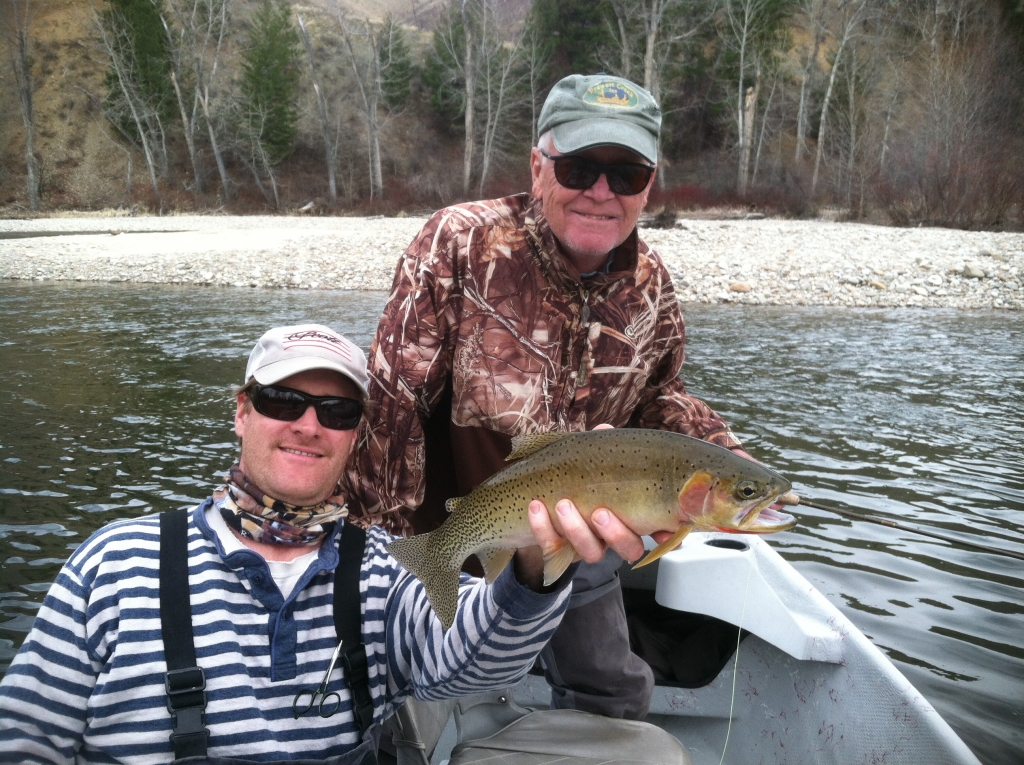
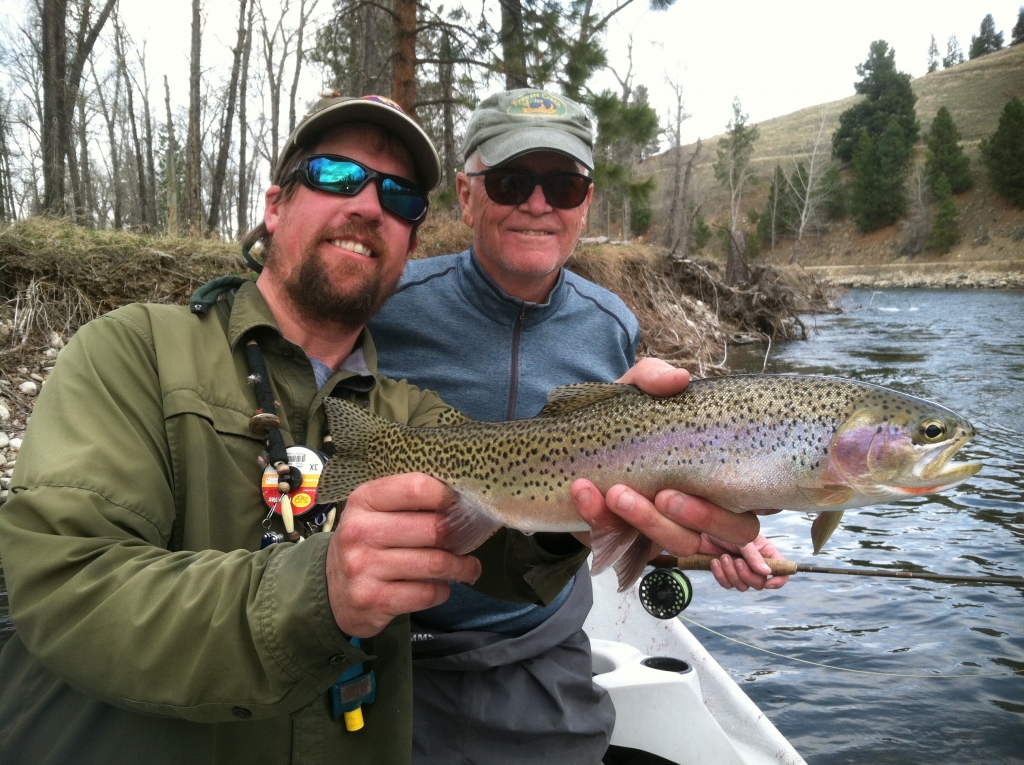
Wow, let the high water games begin! What a difference a week makes to the flows. We have had a week of above average temperatures and some very mild spring weather and that kicked out some of the lower elevation snow. In my opinion, this is when the fun begins. The low flows are over and the real world of mercurial spring conditions begin. I love this time of year, when anglers debate whether the rivers are gonna blow up and become to hard to fish or if you can brave the high tide and still catch some nice trout. The prediction model becomes much more difficult and the only way to really discover what will resolve these debates is to assess the river conditions each day and try to defy the odds of catching trout in a rising river. I fished the Middle stretches right during the jump and was not expecting to catch too many trout. I was right. We actually got some action on dry flies, but very seldom and only in site specific spots like little back eddies and foam holes. It still amazes me after all these years that trout will come up for a dry in these conditions. Make no mistake about though, the fishing was very difficult. The talk of the worm flies, streamers, and indicators become more common than the talk of “the Skwala Hatch.” The fact of the matter is that every day is different and sometimes you can catch some nice trout in these conditions, just not too many. Obviously after dealing with low flows, these pulses can change the whole game. One thing that is fun to mention to educate you on trout behavior is that the rising waters can “freak the trout out.” In order to understand why this happens, you need to understand trout physiology. Fish have lateral lines and the lateral line on a trout can be seen when you look closely. The lateral line is the mechanism by which a trout senses movement and changes in water pressure. When there are big changes, they can sense them and the bigger the change, the more freaked out they get. But since we had some low elevation snow already get pushed out earlier in March, this event might not last as long as it would if there was more snow in the lower elevations. In my opinion, with the forecast showing cooler temperatures, the rivers are gonna stabilize, and even drop. Then the lateral line enables trout to depict stable conditions and trout adapt to the new waters and can become less “freaked out” and hopefully happy!
So lets check the flows and use see what is going on. The flows on the low river near Missoula are up over 2000 CFS and looking like they may be starting to turn, but still hard to tell. These flows are significantly larger than the middle and Upper river because of tributaries like Lolo, Kootenai, and Bass Creeks that can rise quickly in the warm weather. The middle river at Bell Crossing flows are stabilizing, but there is a lot of debris in the eddies and backwaters. The upper river flows in Darby stairstep up everyday, but are now holding at 800 CFS. These pulses really trigger the spawning desires of rainbows and cutthroat and this pulse starts the real spring fishing in my opinion. So how do you fish these conditions?
The hatches are still here, but less predictable in the bigger flows. The photos above with Outfitter, Joe Sowerby, myself and one of my best fishing friends, Bud Eugster were taken today in the stretches above Hamilton. We did not catch tons of trout but we caught some good trout on dry flies and had some fun meandering through the channels in higher flows. The river will still produce Skwalas and Nemouras, but the mayflies are definitely starting to show up. There have been blue winged olives, March Browns, and some early Gray Drakes. Look for trout to search for these food sources as they try and get comfortable in the new flows. Don’t hesitate to work hard and try streamers and nymphs because the dry fly action can be unpredictable. I could tell you to use the worm in these flows, but just look at every other report for that info because that advice is a little too predictable and redundant in most reports. I can tell you that the tippet choice can be 3x and even 2x, they simply cannot see the line in these conditions so give yourself a chance at landing a trophy because they can be strong in big flows! Make no mistake about it, the flows have created hydraulics and even new sweepers. The irrigation dams have become more dangerous and be vary careful in the Supply Ditch Dam between Woodside and Tucker because that one has power! I had to do some weight shifts in my driftboat in order to adjust to the hydraulics, so please no floating if you don’t know what you are doing! The rains coming can give us another pulse but use the graphs and monitor the conditions in order to make the best decision on your next adventure! Let the high water games begin!
March 23, 2013
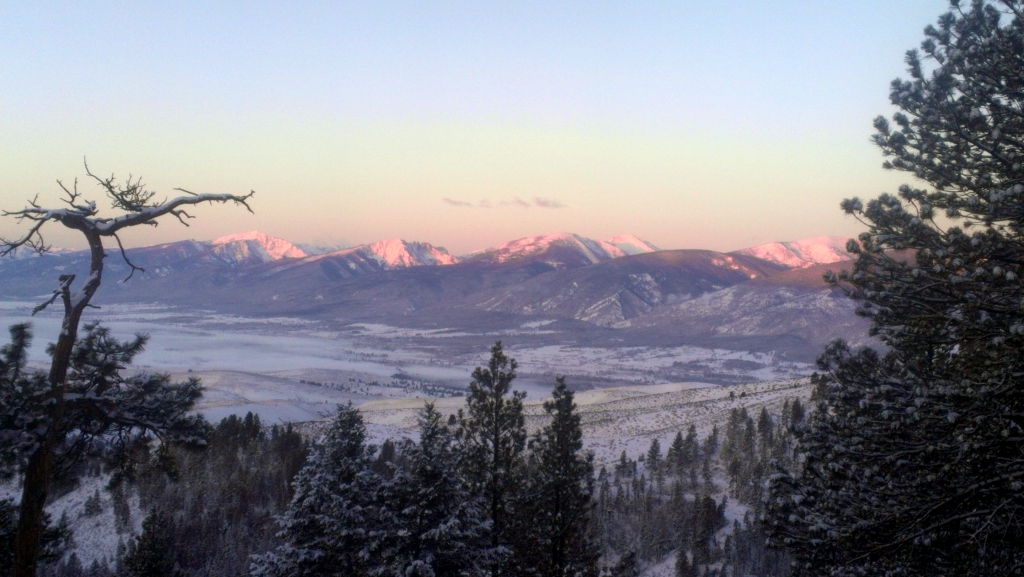
Well there have been some nice changes since the last report. I will discuss the current conditions and how they can affect your Bitterroot Fly Fishing Trips. Before I discuss the how the weather impacts the fishing in the early spring, I want to talk about the flows and what has changed and what do look for this week.
In the previous report I mentioned that the early spring is one of the lowest water levels of the year. Late February and early March are typically when the rivers and the groundwater tables are at their lowest. Sometimes homeowners run out of water on their wells and have to drill deeper because their aquifer has gone below their intake. As the weather warms up the snowpack melts and starts to runoff as both surface water and groundwater recharge. This was clearly happening and we were starting to lose some of our below average snowpack in the Bitterroots. Here is some pretty cool data that is good news. If you look at the this cool snowpack data site and enter the date for March 15, they will give you the data from last week. The overall percentage on March 15 is only 82, one of the lowest in the state! But after the winter weather we have had in the last week, I checked the current level, and it is now 89%! I like that, we gained snowpack! This may be short lived, but it is a sign that spring precipitation can help both surface and groundwater flows. So what is going on with the flows and what should happen this week?
The flows at Darby reached over 340 cfs twice last week, but since the nightime temperatures have been in the low 20s in the last few days the runoff valve was shut off ond now it has dropped back to a low 239 cfs. It dropped 60 overnight with these cold temperatures. A similar effect has occurred on the Middle river at Bell Crossing. The warm weather a week ago that sent some low elevation snowpack out had the flows up to 600, which is great. But now they have dropped down to 558. But the lower river gauge near Missoula is somewhat stable near 1000 cfs. These flows tell me that with the spring like weather coming this week will cause a little bump in flows again this week and make for some good fishing conditions. So how does the increase in flow and cold temperatures affect the hatch and the overall fishing?
First of all, the increase in flows will cause the trout to start moving from some of their slow water winter holes. Some trout are still holding in the same water, but other trout that are hunkered down in deep slow water pools start feeling the flow increases with their lateral lines and start moving around a little more. Some of these trout have not even seen a fly yet. Since rainbows and cutthroat spawn in the spring, they also start their instinctual spring migrations. This movement really picks up in the next couple weeks. So, the big question is what is the status of the hatch and how is the fishing?
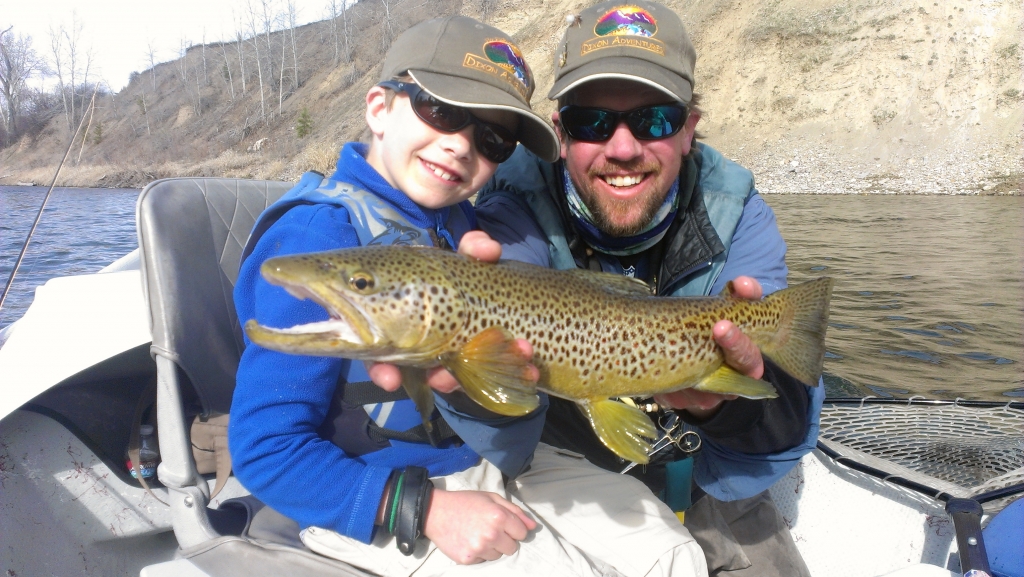
The hatch is here, but not really. As you can see from the photo above my son Zack caught this beauty on a skwala dry a week ago when there was some warmer temperatures and I noticed some hatching stoneflies in the sun. There were a few skwalas and as the warmth really heats up, there were some nemouras flying around. As I mentioned in the previous report, stoneflies are photophilic and they get active in the sun. The forecast for this week shows that we are probably in for significant increases in stonefly activity. There are still skwalas hatching in the cold temperatures, but not many. Cold weather will slow down their hatching activity as they will not try and migrate out of the water when it is cold and not very sunny. Some are still hatching in the right areas, but the real hatch is on the horizon. The fishing is actually pretty decent, but if you are looking for dry fly activity you have to do what I call the skwala stall. The fishing will be best in the heat of the day in the afternoon and drop off quickly as daytime temperatures drop. Sometimes I call this the skwala shutdown. I actually never get used to this effect. The fishing can be good to great and then all of a sudden, nothing. How does this information help you? Well you need to know in the winter weather that the fishing will start slow and when fishing the earlier parts of the day, you need to have a nymph on to be effective, either as a long dropper or a full on nymph rig. The trout have seen stoneflies in both their aquatic and terrestrial phases, so they know what they are looking for. The water temperature this morning was below 40 and that slows their metabolism down and makes fishing tougher. But as the day warms up so does the water. The water temperature swing on a warm day can be more than 5 degrees, but on these cold days the water temperature rises, but only a few degrees. This is why your afternoon windows are the best. When we do warm up and river flows increase, the trout get more active, especially when nighttime temperatures are above freezing. The temperature gauges on the streamflows are seasonal, but I have been monitoring the temperatures at Florence manually. The streamer bite can be good, especially when the dry fly activity is slim. If you do notice the dry fly skwala shutdown in the late afternoon, making the switch to a streamer in the last parts of the day can produce some decent action. The skwala fishing in the Hamilton stretches can sometimes be better than the lower river, but with this cold weather you will be best looking for your action in the middle to lower stretches where the water is warmest.
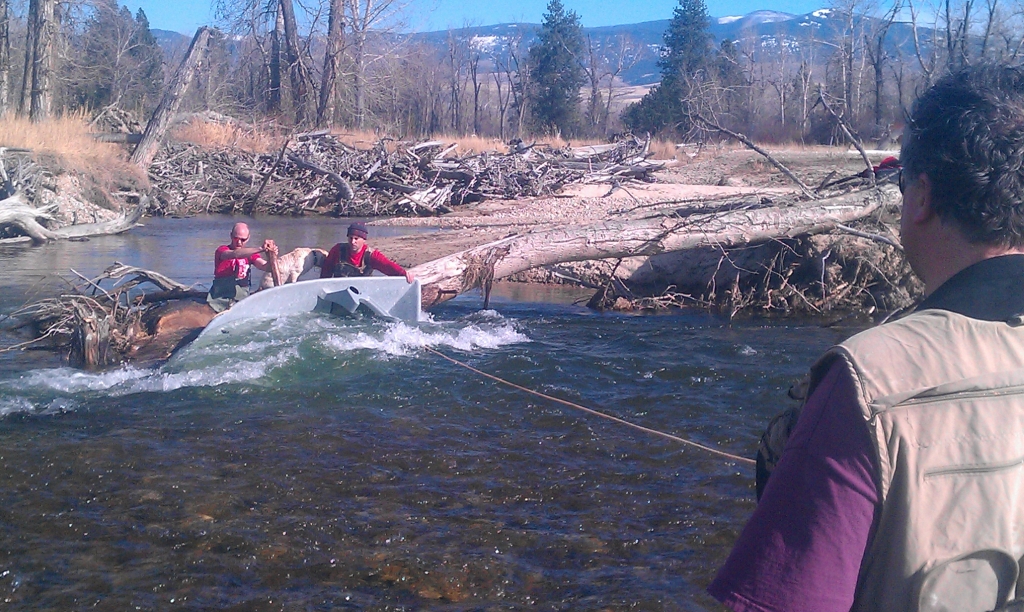

As far as dry fly tactics go I will give you some good advice. Make sure that you are not too cast happy and that you try and stay with your drift in slow water, especially the slow cut banks. Trout are very keen in low flows and can be eager to come to a well presented stonefly dry, but you need some patience. It can take a long time for a drift to cover 10 feet of water, so make sure you try and leave your fly in the water as long as you can. I find that my clients and most people are looking for the classic hit by a log or structure, but some of the big trout are just hanging out off the bank in slow water and a patient, meticulous drift is your only chance. The other thing I will tell you is that most anglers think that the dropper nymph increases your odds, double trouble right? Well this may be true in the slow morning hours, but as the dry fly bite turns on in the afternoon, there is an advantage to taking that dropper off. When you are fishing open water, it does not matter, but when you are looking for a tight drift along the logs and rock walls, taking the dropper off will help your odds, not to mention save you some lost flies. As the river flows increase, you can get away with 3x on the dry. Some anglers will use 4x and 5x, but when you hook a trophy with all the structure in the Bitterroot, you need your strongest line to keep them out of the debris. The heat this week will bring out more skwalas, nemouras, and anglers. The fishing has been reported as being good, but I don’t think the real fun has begun yet. I always finish my report by warning you that the Bitterroot is a dangerous river, so if you are a novice rower you can get in trouble. There was a driftboat that sank in the Darby water when it hit a tree and I have been part of many river rescues, so use caution and please be courteous to other fisherman, especially wade fisherman. Good Luck and feel free to contact me on river questions or if you want to know about some of my spring float specials!
If you want to experience the best fishing beers on or off the water, check out the Kettle House Beers! Eddie Out, Double Haul, and Cold Smoke can be your best friend on good fishing day, but especially a slow one because you will catch a buzz! Here is a link to the Kettle House. You might even see my fishing buddy, the famous Al Pils. Here he is below with an Eddie Out and a construction cone salvaged from the river! I think I might crack one right now while I tie some flies!
March 10, 2013
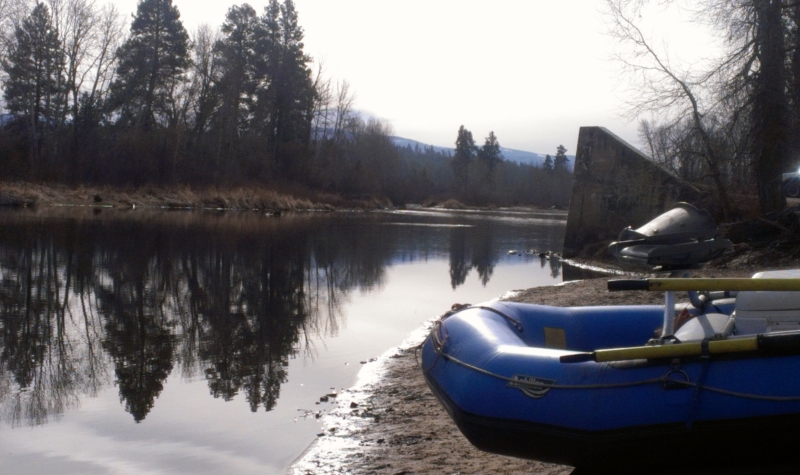
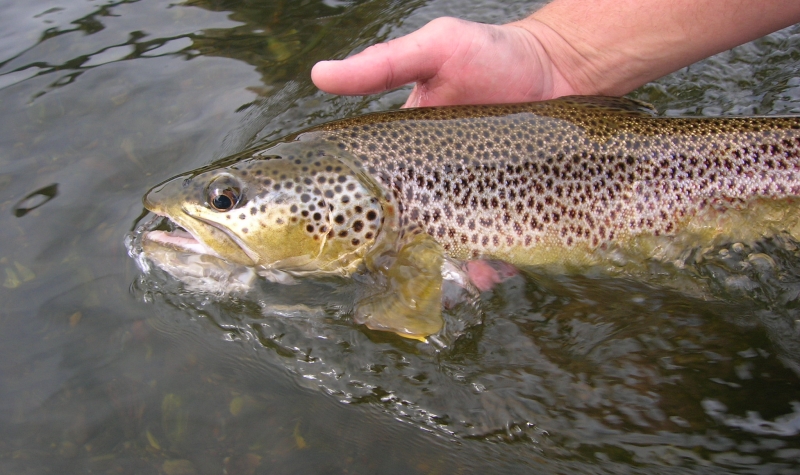
Well a new season is upon us and it is time for me to start my reports. As some of you might know my reports are different than most. I try and give a realistic report that is commercial free, in other words I am not a shop trying to tell you the “fishing is hot and we have some great flies!” I want to give you accurate reports that can have links and information that can help you learn more and understand more about the sport of fly fishing. Being a good fly fisherman is not just about casting well or how many fish you catch. It involves many sciences and I try and incorporate many of them in my reports. I will discuss entomology, weather, river levels and predictions, trout habits/tendencies, tactics, strategies, and more. Before I get into the big question of skwala sightings, I want to give a seasonal prediction and help you understand what the season has in store for us.
Here is a link to the current snowpack. If you look at the legend, there is a lot of yellow and some orange, which is below or low snowpack. The green is about average. We are looking at potentially a tough season late in the summer if we do not game some snowpack and get some summer precipitation. The whole country has broken drought records and last year the Bitterroot Valley and Missoula areas suffered some of the worst drought and records with no rain since the 19th century. Check out this story in last year’s article. So we are currently losing snowpack and we need as much as we can get, but more importantly do your best rain dance when we reach the summer months. Summer rains are crucial for maintaining healthy water temperatures and levels for trout. May is usually our leading month for precipitation, but we could use another couple winter storms. So don’t complain about any snow or rain please!
So what is going on right now? Well there are certainly lots of anglers getting their boats wet and hitting the river. The weather has been warming up and so are the water temperatures, but usually at this time of year the water levels are very low. I guess it is good to try and hold the snowpack as long as we can, but the river flows at Darby are below average and averaging around 200 cfs, which is a trickle. The flows in the middle river at Bell Crossing are also low and this means that there are lots of gravel bars and low water floating conditions. The low water is normal for pre-runoff spring conditions and there are pros and cons to these flows. There is spring fever in the air and I have seen a lot of boats migrating down the Bitterroot valley and finding sections that have solitude and low pressure can be tricky and even non-existent on certain days, especially warm weather weekends. In this case floaters should be conscience of this and please have good river etiquette and make sure to be courteous to wade anglers. If you see a wade angler in a tight spot, make the effort to pull your boat over and walk behind or near shore so you don’t spook the trout in the wade fisherman’s water.
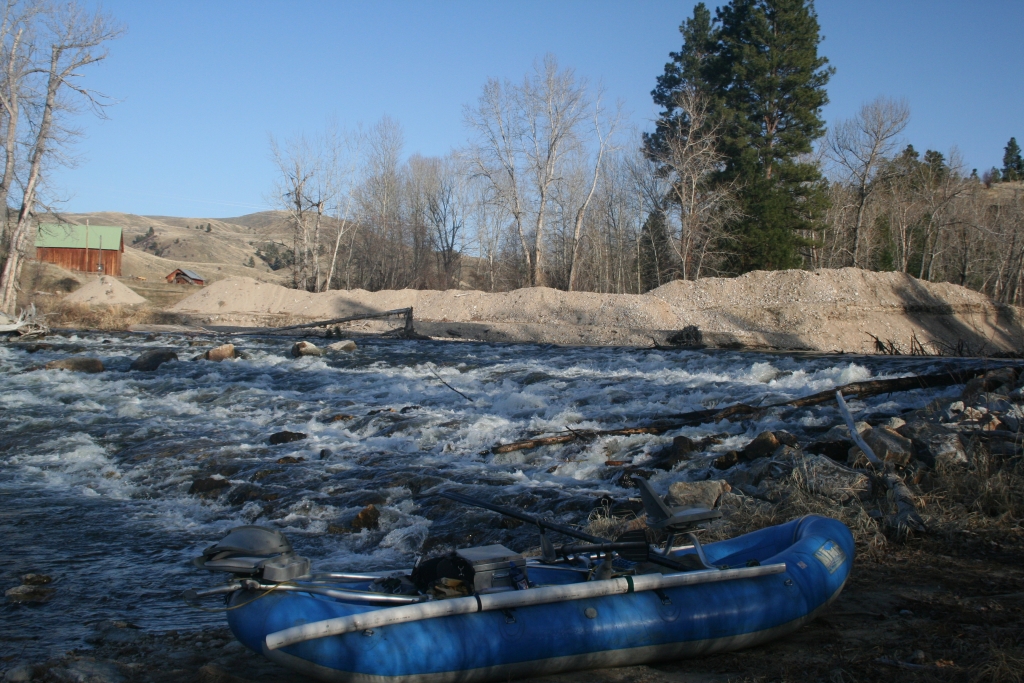
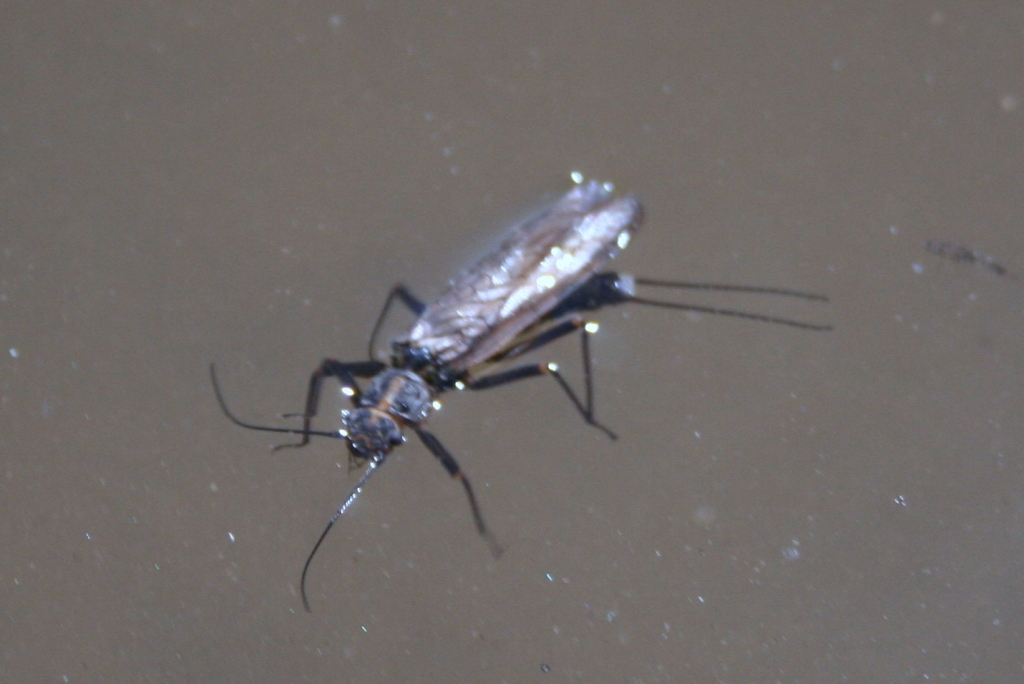
Here is a picture of Sleeping Child Dam in low flows and is a definite portage. Low flows can present some difficulties to novice and even experienced rowers, so please use caution when you are floating.
What can be the benefits to these low flows? Well, the trout are more concentrated and locating good holding water is not as challenging as it is in higher water. Water temperature gauges are down on the USGS site, but they are rising over 40 degrees which is conducive for good spring fishing and the emergence of the famous Bitterroot Skwala. The lower waters mean that on the high pressure sunny days, the water can heat up faster. This can kick start the hatch and get the stoneflies migrating to the edges as they look to hatch. Skwalas and all stoneflies are photophilic, meaning that they love the sun or thrive in light. The sunny days can really kick this hatch in. It doesn’t mean the fishing is best in the sun, but it can get these critters hatching.
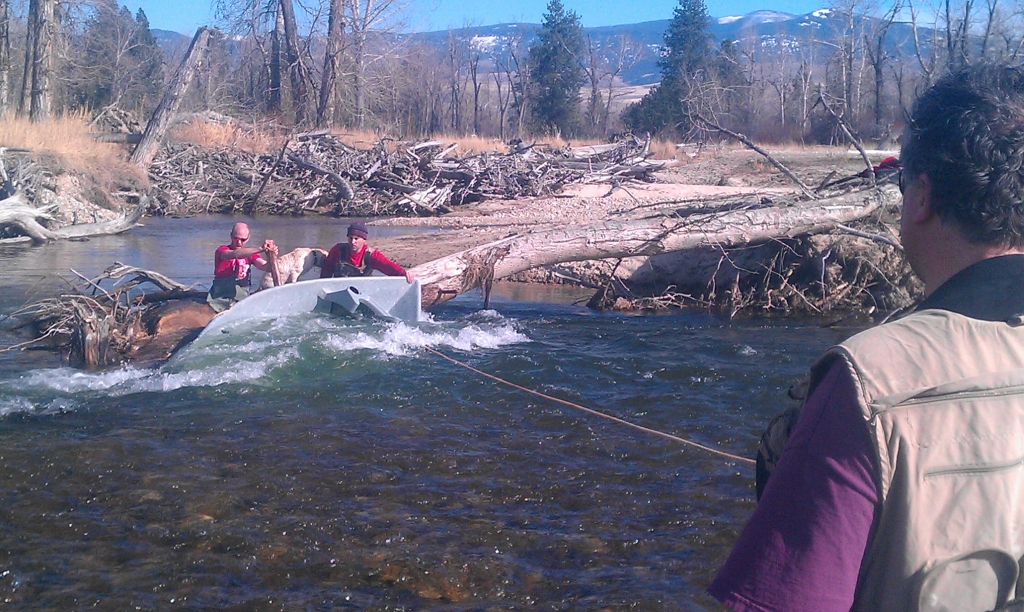
Some of these stones have been sighted, but the real skwala hatch has not begun. The afternoon is always the best time to try these dry flies. However when they start hatching in bigger numbers, dry fly fishing can start before noon when the nightime air temperatures are above freezing. The most successful tactics at this time of year definitely involve nymphing with stonefly patterns with a smaller nymph like a copper john or pheasant tail type beadhead trailing. When you reach the warmer parts of the day keep your eye out for rises. Most of the risers at this time of year are in soft (or slow) water. Especially on the middle or lower river, midges are actually the primary dry fly source. But as the skwala starts to approach the adult phase, trout will certainly start looking for them. Tippet sizes are mostly in the 4x range, but definitely 5x if you are going to try and bring them up to your midge dry. some deep water nymphing tactics can include 3x on the stonefly nymphs, but during low flows the trout are certainly spooky and wary. I will be trying to post a report each week and as the waters rise and mercurial river conditions make your fly fishing choices more difficult, I will try and keep you informed on what is going on. One last note, if you don’t know how to row, please be careful and don’t end up like on the below photo that I came across last year.
September, 2012
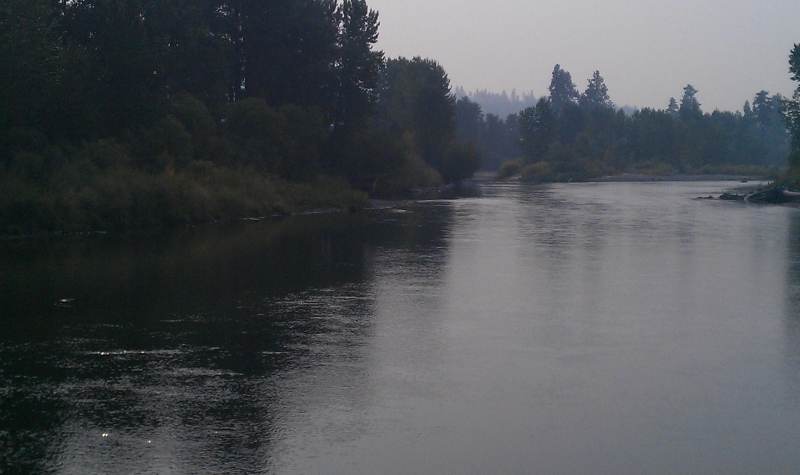
Well what can I say, I let my reports slip for a while again. Maybe it is because I have been treating the Bitterroot like the plague! The Mustang Fire has burned over 300,000 acres and is choking the Bitterroot Valley. It is even choking the Missoula Valley most days. I have fished the Bitterroot for only a couple days in the last month because of the smoke, but there are certainly plenty of guides and anglers willing to suffer the smoke and do some fall fishing on the “Root.” The Bitterroot is a complicated system and there have been some changes in the last week that might help you understand the dynamics of a river that has suffered low water, irrigation, smoke, and severe drought. We need rain desperately! If we had rain it would flip the aesthetics and fly fishing the Bitterroot would have a whole different meditation. So let me explain how the river has survived the low water and how the river has survived the drought.
Here is a good article from the end of July that really helps one understand the complexity of water management on the Bitterroot and what fisheries biologist and Montana Fish Wildlife and Parks (FWP) do to help battle low water and maintain healthy trout habitat. The Bitterroot used to suffer during these droughts in the 80s until FWP acquired more than 10,000 acre feet of water from Painted Rocks Reservoir. If you look at the Conner Flows, these are actually the flows from the Dam at Painted Rocks. You can determine this by seeing what I call a robotic graph. You can see that last week they were releasing over 350 CFS and they have “stair stepped” it back to under 200 in the last 7 days. I know there are guides that basically never leave the Upper Bitterroot that have had some decent fishing in the Upper Bitterroot, but at the price of breathing unhealthy air and lacking the aesthetics of a beautiful day on the water. Since there is no rain and a very limited run off you can see that the Darby Graph has a similar graph as the dam, since it is about 30 miles downstream from the dam. The Bell Crossing graph, another 30 miles downstream has been struggling to reach the 25 year median and suffers low water because of all the irrigators trying to keep their alfalfa and crops green. There are not as many heavy irrigation draws below this site, so the Lower Bitterroot graph in Missoula is lower than the median, but holding steady at just under 700 CFS. The weather has had cool nights and smoky skies and the fall hatches have started. So how do you fish the Root at this time of year?
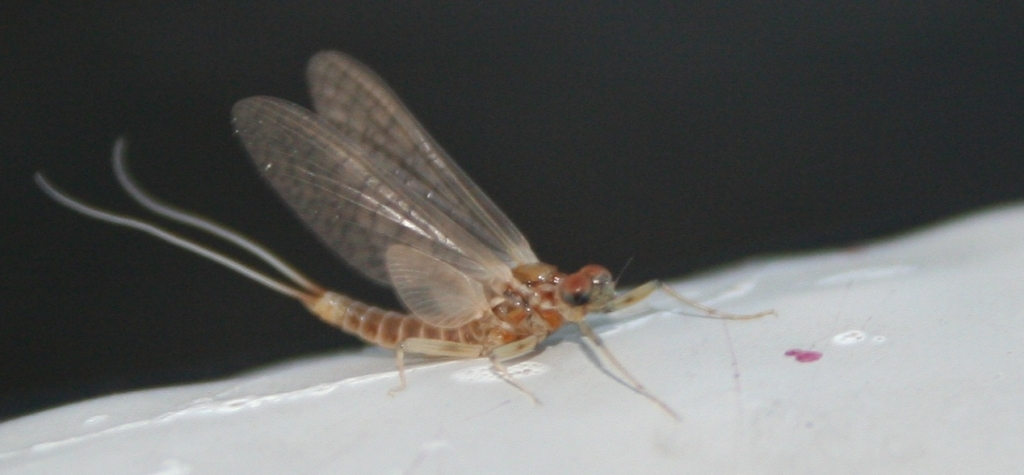
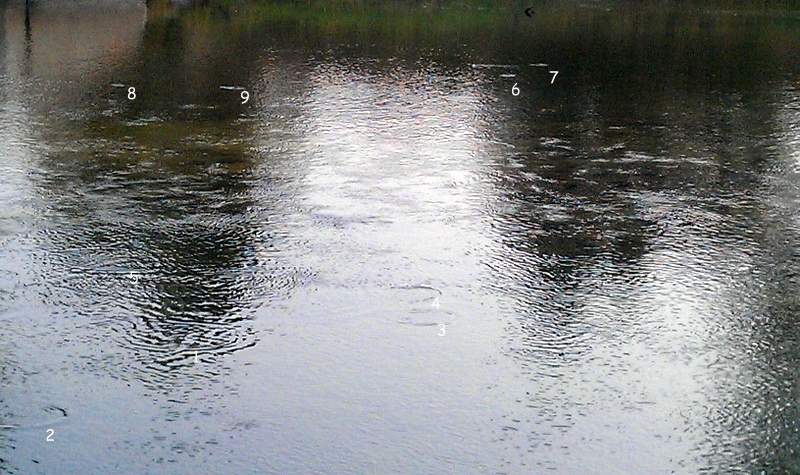
If you look at the photo above, I have numbered 9 rises in one photo and there are actually more in there. The risers leave a distinct change in the shape of the water, look for rings that have ring shapes and bumps on the water that leave a mark on the normal flow. The tricos have started and these tiny triple tailed mayflies have started their fall cycle and the trout know it. The trico hatch on the Bitterroot and on many rivers in Montana are what I call site specific. There is heavy feeding activity on tricos concentrated in certain areas on the river, and void in other areas. The tricos go all the way up to Hamilton and above, but the main zones are on middle and lower stretches. The tricos present quite a dilemma for most anglers and guides. Trout feeding rhythmically on size 20 adult mayflies and deadfall spinners is not an easy game. There is a lot of patience and precision involved in this sadomasochistic fly fishing. I can give you a few hints. This is generally not designed for beginners or even intermediate anglers. Focusing on mastering the cast, hookset, and playing trout on light tippet can be frustrating, but essential to elevating your game. That is what makes fly fishing for trout so fun sometimes, if it was too easy then everyone would be catching them when they rise, and this is not the case. Some anglers and guides believe that these sippers are so intelligent because they are educated by anglers. I do not believe this. As the water temperatures drop, the trout feel comfortable anywhere, including in the shallows. They become very keen to their environment and thus become more easily spooked and more selective to what they are feeding on. They are instinctively smart, I call it. Trout in shallow water, feeding on size 20s have way better vision and they will spook easily. Any flies presented hard or ripped off the water can be detected beyond 5 feet at this time of year. So what is a good rig during this hatch. I am a big fan of a double dry set up. One of my tricks is to tie a very segmented black ant that is a good point fly. Then I use a tiny parachute or a spinner during whichever phase of the hatch I am fishing as a trailer on 5x or even 6x only 12 to 14 inches behind the point fly. The total length of the leader should exceed 11 feet if you are going to try and trick the PHD trout. The hookset needs to be what I call a lift set and not a heavy hopper set or you will break your light line. Then you need to honor there power and play them and realize that even a 14 incher can break 5x if it is not played right. The water temps are low so trout have a little extra juice due to the higher Dissolved Oxygen. What else is going on?
Well with the cool and even freezing nights we have had, the Hecuba hatch is happening in the afternoon hours. If we ever had a real, rainy, bad weather day this hatch would burst. But with the current never ending weather pattern, Hecubas are hatching but not in full force. This hatch parallels some of the Bitterroot Drake hatches and the trout do see plenty of these meaty mayflies so using a Hecuba pattern can be rewarding. The other style in the afternoons is just sticking with the terrestrials. Scanning with ants and hoppers can produce some nice trout. I have always believed that September is the best month to Hopper fish as the cool nights have initiated the latter part of the hopper life cycle and more hoppers end up on the water at this time of year. So all in all the fishing is good and the mayfly hatches can be stronger since the smoke acts like cloud cover. I am hoping for weather and rain so we can enjoy fly fishing in beautiful, healthy conditions. Do your best rain dance and good luck trying to excel your skills during this exciting time of year to fish!
July 27, 2012
The Bittereroot is getting low and hopefully we can fend off the drought and dangerous water levels. One thing is nice is that Montana Fish, Wildlife, and Parks owns water out of Painted Rocks Reservoir and it is getting close to when they will release water. I worked on the upper stretches and the water temperture was actually below 60!, so that part is nice. There are almost no hatches except for some pmds in the morning, but the fish are not really feeding on them. I have had some decent days on the lower river but I am watching the temperature gauge on the Missoula gauge closely. The cool night had the morning water temps at 63, but it is heating up with the hot days. The key is the nightime lows, if we can get some cool nights, the fishing can be decent on attractors. But as soon as we have upper 50 or even 60 degree nights, the water temperatures on the middle and lower ends can get too hot to be fishing. I do know where cold groundwater springs are and the trout have healthy water temps, but you have to spend some time studying the river to learn about these areas. Look for noticeably clearer water and then check the water temperatures and see if it is cold. If it is there is a good chance that there are trout around. The hopper fishing has started but I have to say, I really don’t notice a lot of hoppers around. The Bitterroot will start up with the next phase of hatches after about August 15th. the next hatches that I look forward to are the Hecuba and tricos. We need some cool nights and these hatches are the beginning of our fall fishing. They usually start up in the third week of August or so. So pray for rain and cool nights and make sure you are treating the trout right by knowing your conditions.
July 14, 2012
Wow, let the high water games begin! What a difference a week makes to the flows. We have had a week of above average temperatures and some very mild spring weather and that kicked out some of the lower elevation snow. In my opinion, this is when the fun begins. The low flows are over and the real world of mercurial spring conditions begin. I love this time of year, when anglers debate whether the rivers are gonna blow up and become to hard to fish or if you can brave the high tide and still catch some nice trout. The prediction model becomes much more difficult and the only way to really discover what will resolve these debates is to assess the river conditions each day and try to defy the odds of catching trout in a rising river. I fished the Middle stretches right during the jump and was not expecting to catch too many trout. I was right. We actually got some action on dry flies, but very seldom and only in site specific spots like little back eddies and foam holes. It still amazes me after all these years that trout will come up for a dry in these conditions. Make no mistake about though, the fishing was very difficult. The talk of the worm flies, streamers, and indicators become more common than the talk of “the Skwala Hatch.” The fact of the matter is that every day is different and sometimes you can catch some nice trout in these conditions, just not too many. Obviously after dealing with low flows, these pulses can change the whole game. One thing that is fun to mention to educate you on trout behavior is that the rising waters can “freak the trout out.” In order to understand why this happens, you need to understand trout physiology. Fish have lateral lines and the lateral line on a trout can be seen when you look closely. The lateral line is the mechanism by which a trout senses movement and changes in water pressure. When there are big changes, they can sense them and the bigger the change, the more freaked out they get. But since we had some low elevation snow already get pushed out earlier in March, this event might not last as long as it would if there was more snow in the lower elevations. In my opinion, with the forecast showing cooler temperatures, the rivers are gonna stabilize, and even drop. Then the lateral line enables trout to depict stable conditions and trout adapt to the new waters and can become less “freaked out” and hopefully happy!
So lets check the flows and use see what is going on. The flows on the low river near Missoula are up over 2000 CFS and looking like they may be starting to turn, but still hard to tell. These flows are significantly larger than the middle and Upper river because of tributaries like Lolo, Kootenai, and Bass Creeks that can rise quickly in the warm weather. The middle river at Bell Crossing flows are stabilizing, but there is a lot of debris in the eddies and backwaters. The upper river flows in Darby stairstep up everyday, but are now holding at 800 CFS. These pulses really trigger the spawning desires of rainbows and cutthroat and this pulse starts the real spring fishing in my opinion. So how do you fish these conditions?
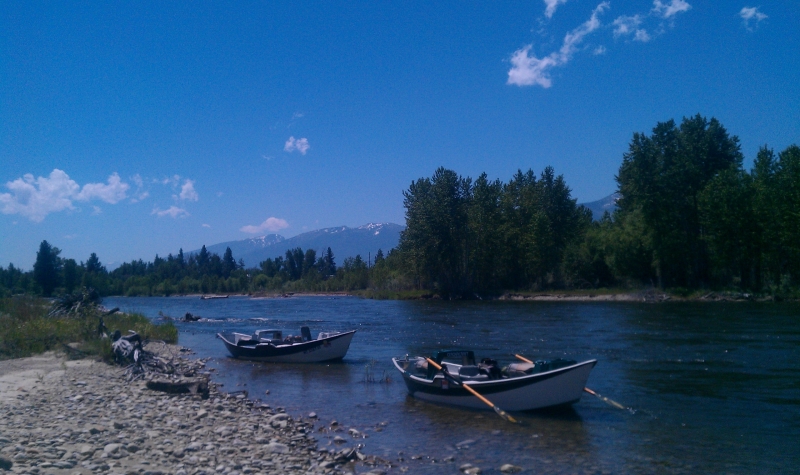
The hatches are still here, but less predictable in the bigger flows. The photos above with Outfitter, Joe Sowerby, myself and one of my best fishing friends, Bud Eugster were taken today in the stretches above Hamilton. We did not catch tons of trout but we caught some good trout on dry flies and had some fun meandering through the channels in higher flows. The river will still produce Skwalas and Nemouras, but the mayflies are definitely starting to show up. There have been blue winged olives, March Browns, and some early Gray Drakes. Look for trout to search for these food sources as they try and get comfortable in the new flows. Don’t hesitate to work hard and try streamers and nymphs because the dry fly action can be unpredictable. I could tell you to use the worm in these flows, but just look at every other report for that info because that advice is a little too predictable and redundant in most reports. I can tell you that the tippet choice can be 3x and even 2x, they simply cannot see the line in these conditions so give yourself a chance at landing a trophy because they can be strong in big flows! Make no mistake about it, the flows have created hydraulics and even new sweepers. The irrigation dams have become more dangerous and be vary careful in the Supply Ditch Dam between Woodside and Tucker because that one has power! I had to do some weight shifts in my driftboat in order to adjust to the hydraulics, so please no floating if you don’t know what you are doing! The rains coming can give us another pulse but use the graphs and monitor the conditions in order to make the best decision on your next adventure! Let the high water games begin!
July 14, 2012
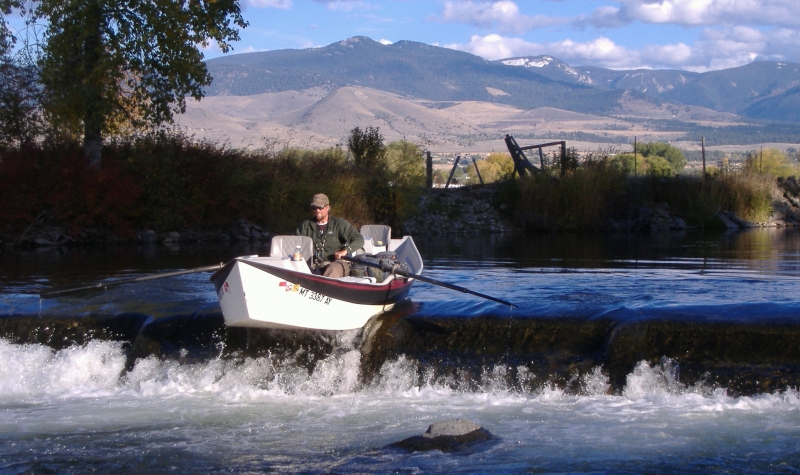
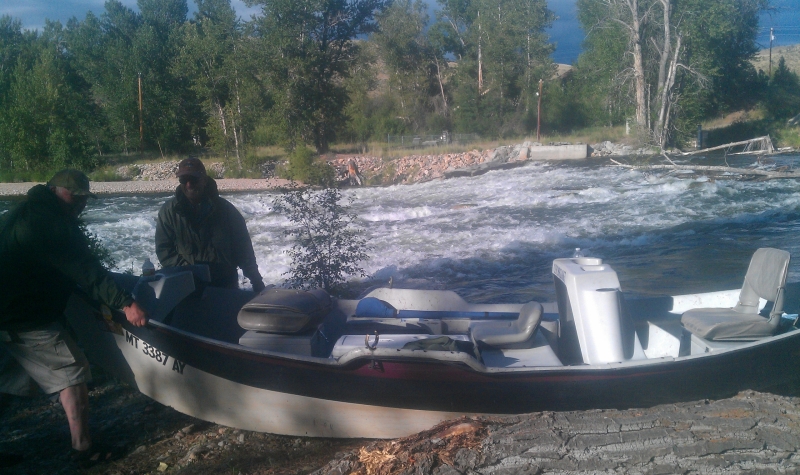
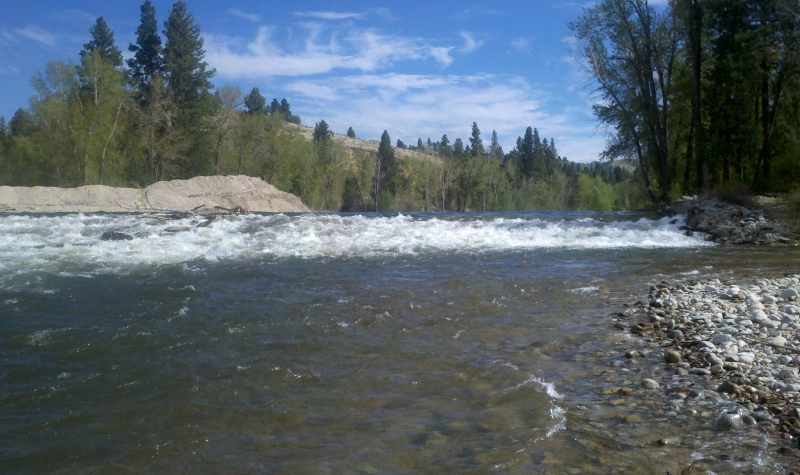
Well lets talk about the conditions after the heat! The pictures above are just a warning as the river drops the irrigation weirs can ecome tricky and even make you portage your boat. If you are even hesitant about your rowing skills through an irrigation weir then you should heed on the side of caution and either avoid floating these sections or just portage your boat. The supply ditch (above left) and Sleeping Child (above right) can be very dangerous. The other dangerous weir is the main street diversion dam in Hamilton. That one is particularly sketchy in a hard boat.
The rivers are actually surprisingly holding up ok. The Darby Graph is clearly showing the diurnal pulse of the river, but only shifting less than 100 cfs from night to day. The temperature gauges are not operating on the upper or lower Bitterroot, but the temps are hovering around 60. The cold nights coming will even keep some of the temps on the West Fork and Upper River below 60. Don’t get me wrong, the levels will be getting low this summer, but hopefully a timely release of Painted Rocks Reservoir water by FWP will keep the temperatures and flows healthy until the fall weather. The middle river gauge at Bell Crossing is dropping fast and it is evident that the irrigators have the faucet turned up to try and fend off the heat and drought. The Bitterroot in Missoula is flowing at a healthy 2550 cfs. It is very strange actually, because it is like the only graph that is above the median mark. There is a big difference between the heavily irrigated sections of the middle river and the lower river. Kootenai Creek, Bass Creek, Lolo Creek, and more are puting cold water in the river and there are not any massive irrigation pulls. The water temperature did reach 68 in the heat which is scary for the second week of August, but now it is back to 63 degrees. So how are these 3 sections fishing?
The Upper river still has a variety of stoneflies (sallies, Bitterroot stones, lime/chartreuse stones, goldens, and more. There are also PMDs in the morning and Caddis in the evening. The Middle river has the same hatches, but the Drake spinners might be bouncing around in the sky a little more. The drake spinners are a phenomena every year that fools anglers into believing there is a hatch. These decent size 12 skinny spinners dance up and down in the air sometimes all day long as they complete the final phase of there life cycle. Not many are hatching or on the water. Your best chance is throwing some stone patterns, quigleys, and parachutes for your best dry fly activity. The lower river has some hatches that are site specific in the morning anf then there are a few stones flying around here and there, but not as many at all as the upper river. I like using 4x mostly on dries and droppers, but there may be a few cases in certain picky fish scenarios for 5x. Droppers can work well at this time of year, but they can be tricky to fish with if you are working the woody debris cutbanks that can eat droppers. You must fish with what I have called dropper awareness. this simply means if you are drifting into a sunken root ball or log you must drag your dry and swing the dropper up in the water column to avoid the snag and then you can lower your rod tip to continue your drift. This can be an effective technique because you might find that the trout are attacking the dropper on the lift. Be careful on snags and sweepers as these obstructions take on a new form during the transition to low water. Good luck and stay cool!
Week of July 8, 2012
Week of June 20, 2012
June 13, 2012
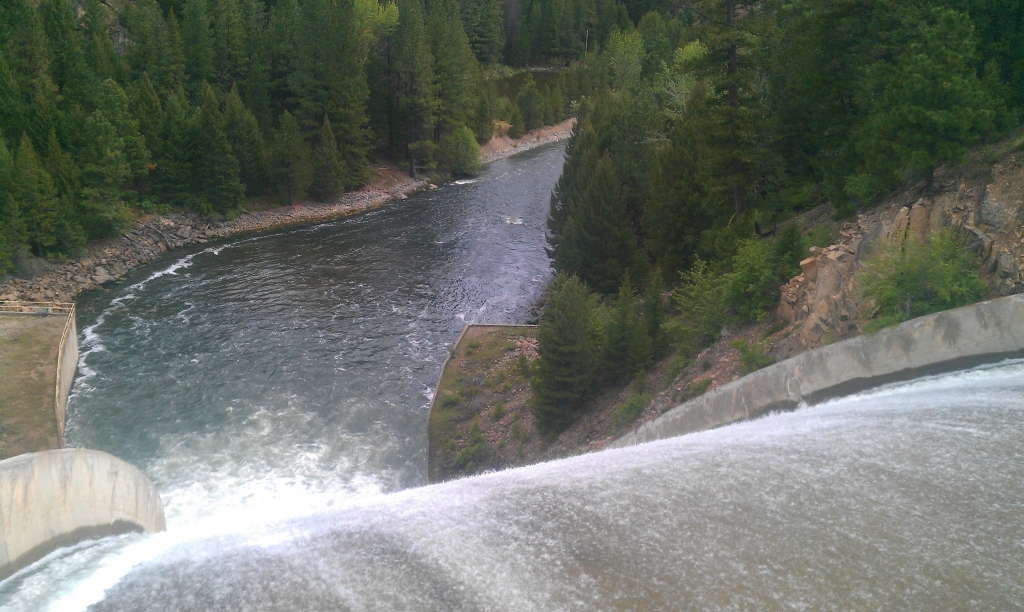
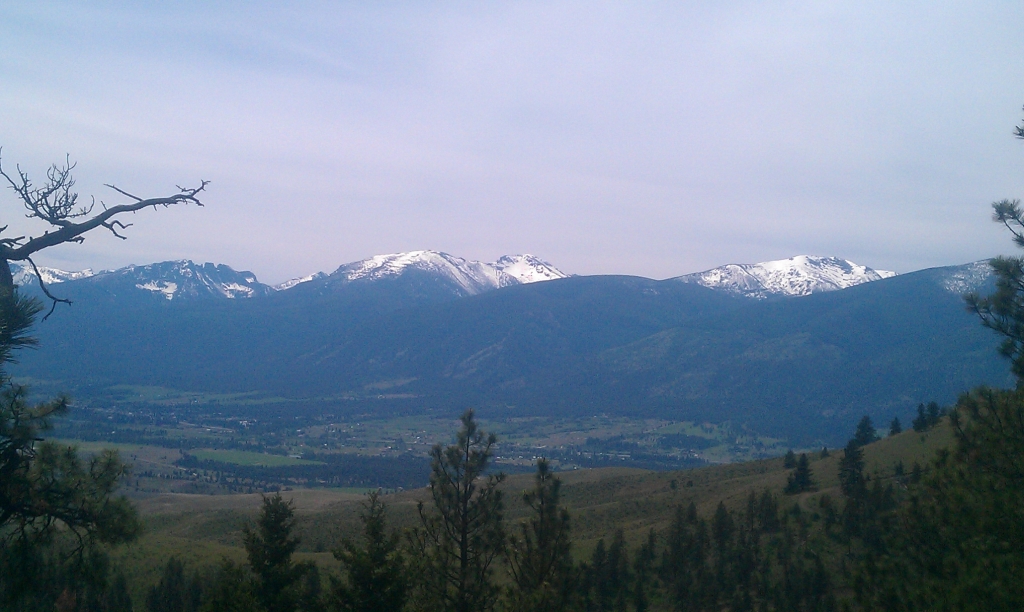
Well, let the hero guiding on the Upper River begin. The salmon flies are out and the golden stones are following quickly. The high pressure ridge that is setting in has the sunshine that caused the big bug explosion. As you can see from my mountain shot there is still snow in the high country. The mainstem and lower river are very vulnerable to heat and rainfall, but right now they are fishable. If you are looking for the dry fly fishing you should focus on the upper river. I have even seen some Green Drakes, which I think is very unusual but this June is shaping up to be one of the best years for June fishing since the drought years. There will be a lot of traffic on the West Fork during the Salmon Fly sprint, but don’t be afraid to get out there and experience this spectacular fishing. If you are floating below the canoe access, you better not be a novice on the sticks. The current flow of 634 is below average and the pockets and boulder dodging is in full swing. The upper river in the Darby to Hamilton stretches can also give up some dry fly fishing but the fishing. The Darby Graph is a perfect example of how vulnerable to rainfall the river is at this time of year. As you can see it jumped, but it is already on its way down. The middle and main river are total adventures and experiments. The dry fly activity will be almost void for a a couple weeks, but things might heat up early in these stretches. If you are floating the middle sections from Hamilton to Bell Crossing, you never know what log jams or new channels you might come across, so use caution, but enjoy the pioneering adventure! Good luck all, the fishing will be fantastic in the next few weeks and hopefully we won’t go from great fishing conditions to drought conditions overnight! Pray for rain in a couple weeks when the heat sets in.
June 1, 2012
The recent cold snap has created a perfect storm for some great conditions throughout the whole state! I mean really, the graphs are incredible! The West Fork Graph, The Darby Graph, and Bell Crossing Graph all reveal some of the most dramatic decreases in flow I have ever seen in 20 years for June 1! Is the run off over? No. Will the rivers blow again? No, not really but any heavy rainstorms can cause rising waters. The heat will also cause rivers to rise, but if the temperatures stay like the 10 day forecast shows, look out for some phenomenal fishing! The whole river is fishable, but if you are going to chase the dry fly fishing you need to go to the upper river and forks. The Salmon flies are coming out and especially after the sun comes out, these big bugs will be doing their nocturnal invasion of the shore. The salmon flies can be found as low as even Hamilton, but the most of them are upriver. Subsurface stonefly fishing with 2x and 3x is a good bet, but look out for the dry fly action to start in the heat of the day. The rest of the river is fair game, but that is purely experimental and up to your own adventure skills. One hint I will give you is that if you are fishing during the beginning of a Salmon fly hatch, the bugs migrate to the shore when the sun comes out and subsurface stonefly and bugger fishing can be great on the edges of the river. Be safe in the Big Water and I will be giving more reports as when I have more info so keep checking them or call for advice. Good luck, the conditions are gorgeous!
May 21, 2012
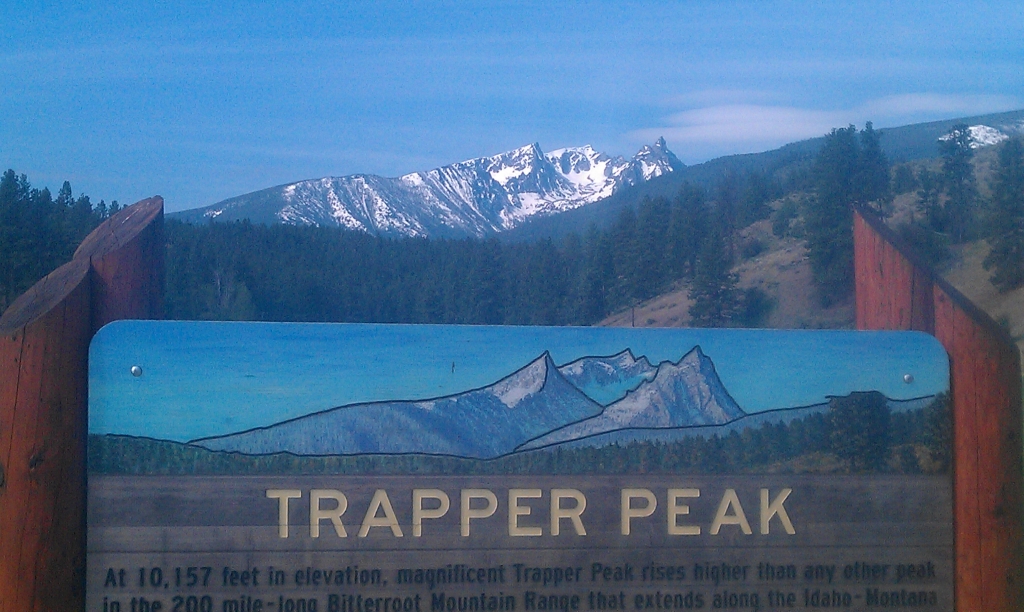
The Bitterroot River has been dropping fast and everyone is talking about great conditions for early season fishing all over the state. Although I am a little worried about drought and low water with climatologists predicting a hot and dry summer, we will have some great fishing during our stonefly hatches. Hopefully Montana will get some timely rain this summer to fend off the low and warm water conditions. As you can see from the photo above there is some high elevation snow and I hope we can have a sustained run off that will keep the snow as long as possible. So what is happening on the Bitterroot? Well the first thing I would like to educate you on is that the USGS Conner Gauge is actually the amount of water coming over the top of the Painted Rocks Reservoir Dam. This dam is very unique. If the water levels do get low and the water temps get high, then the 10,000 acre/feet of water that FWP purchased can actually release this water later in the summer by opening a tailwater gate that will release about 55 degree water. As for fishing, if you look at the graph, the flows have dropped about 500 CFS in 4 days due to the cold front and cooler nights. The whole river has clarity, but the upper river is gin clear. The Darby Graph has dropped over 2000 CFS in 4 days, so this water is also very clear, but still a big flow. The talk of the town is always when are the Salmon flies going to hatch. Well, stoneflies are photophylic, they love the sun. As for Salmon flies they also like 50 degree water. So with this weeks cooler weather and not as much sunshine I do not think they will come out yet, but keep an eye out after a couple sunny heat days. If you are going to fish these upper sections, then just be aware that there is always a chance of a new log jam and changing channels, so use caution. I would focus on stonefly nymphs, copper johns, and of course the stupid worm. You can also experiment with streamers because the temperatures are conducive for aggressive trout. Look for big turns in the river that generate nice seems and keep an eye out for the “softer water” where trout can hold in higher flows. I would not use anything lighter than 3X at this time of year. I can give you one little piece of advice that I have learned over the years. You can get strikes on Salmon flies and large dries before the hatch, it has been a phenomenon that I have figured out over the years. I think the trout know these bugs are coming and you might catch some trout on dry flies before the word really gets out, it is purely experimental and requires an “adventure” mentality. The dominant success will be using stonefly nymphs and about a 5 to 6 foot indicator set up.
As for the middle and lower river, they are fishable but very large and watch out for the new sweepers and log jams. In order to have success in the big flows you need to definitely fish subsurface and concentrate on the side channels and big seems that look like good holding water. The best flies in these high flows, I regret to say, are worm patterns. But you can have success on stonefly patterns, copper johns, princes, and other attractive nymphs.
The most exciting thing to me about this early season is that the boat and fisherman traffic will be spread out. Unlike the last couple years where everyone is trying to fish the Upper West Fork or the Missouri during the big flows, this year there will be lots of options and there won’t be as much of a concentration on a particular section of water. The river is dropping fast and I will be checking it out this week. Feel free to give me a call for advice if you are looking to float, because these big flows can be tricky to judge the safety and distance of floats. Good luck and be safe!
May 6, 2012
April 22, 2012
April 21, 2012
The Higher Water Games are Rising!
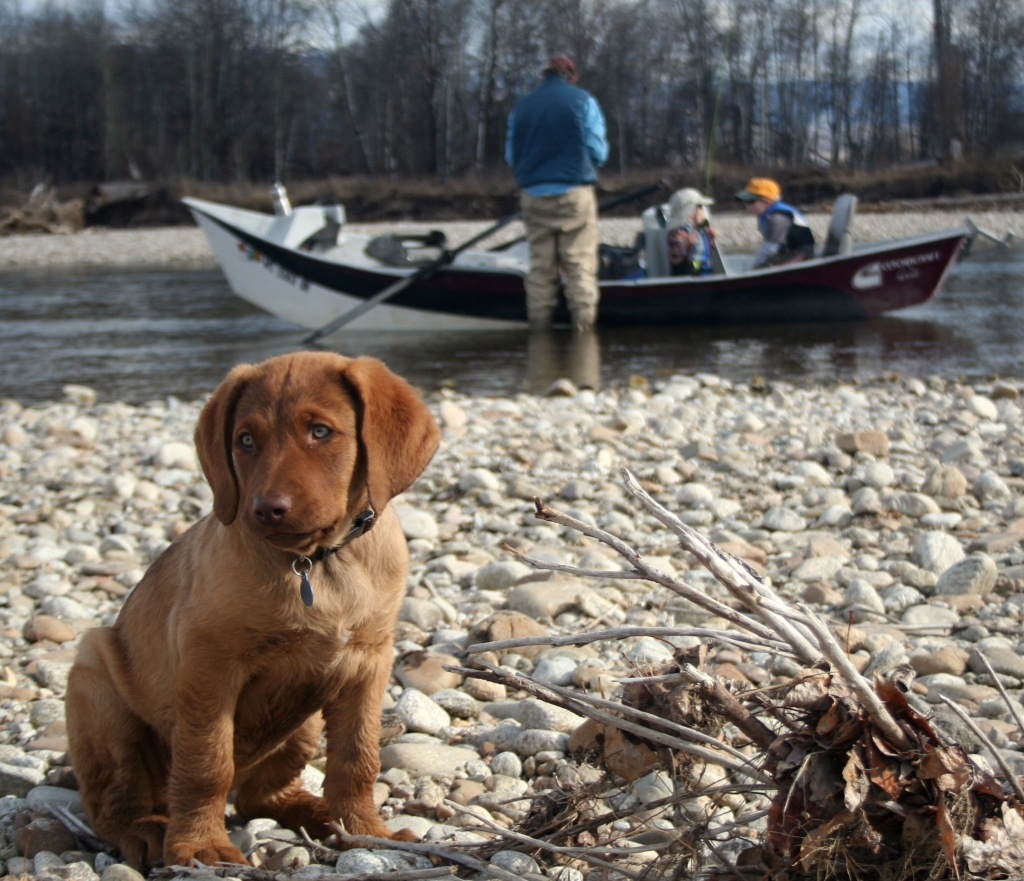
I hope you like the Puppy shot of my dog when she was a pup, well now we have lots of those puppies and they are 6 weeks old. I have about 4 left if you want the most powerful water dog you have ever known, let me know. Well she is starting to blow today! The faucet is opening up more and more each day and river(s) will be gushing in just a couple days! You can fish today and tomorrow, but after tomorrow it might take some creativity to find a spot to fish. If you look at the Darby Graph, the warm nights have started the snow melt in the higher elevations. The Bell Crossing Graph shows a river that is about rise pretty fast. After the heat we have on tap for the next several days, the Western Montana Rivers are gonna show a big pulse. If I were trying to fish in the next few days, I would concentrate on side channels and use some serious caution on the oars. The river will have new debris and stronger hydraulics in this pulse. If the river has visibility, then you may be able to catch some, but the odds are not in your favor. You can fish a rising river and have some measurable success but every day will be different and the lateral lines on the trout are sensing the pressure changes of a river on the rise. Don’t be afraid to put on the “Blue Light Special Walmart Rig.” That is my term for when I have to use the San Juan worm tactics with a gumball and a split shot. For some reason it reminds me of my “Blue Light Special” Zebco days. LOL Try to find the predators with streamers and look for risers in the back eddies for the occasional dry fly moment. I say there is a possibility of this because the food supply has just increased with the burst of Mother’s Day Caddis. That’s right, the Caddis have arrived, but just like most times they come out, the river is blowing up. But trout love Caddis, so they can find a way to eat them in some pretty bad conditions. All in all, the fishing will not be very good, but the adventure can be fun if there is visibility. I would have to say that the rowing skill level to row the river safely right now is higher. There are hydraulics, powerful irrigation dams that take down experienced guides, and new log structures occurring in these HIGHER WATER GAMES. Good luck!
April 16, 2012
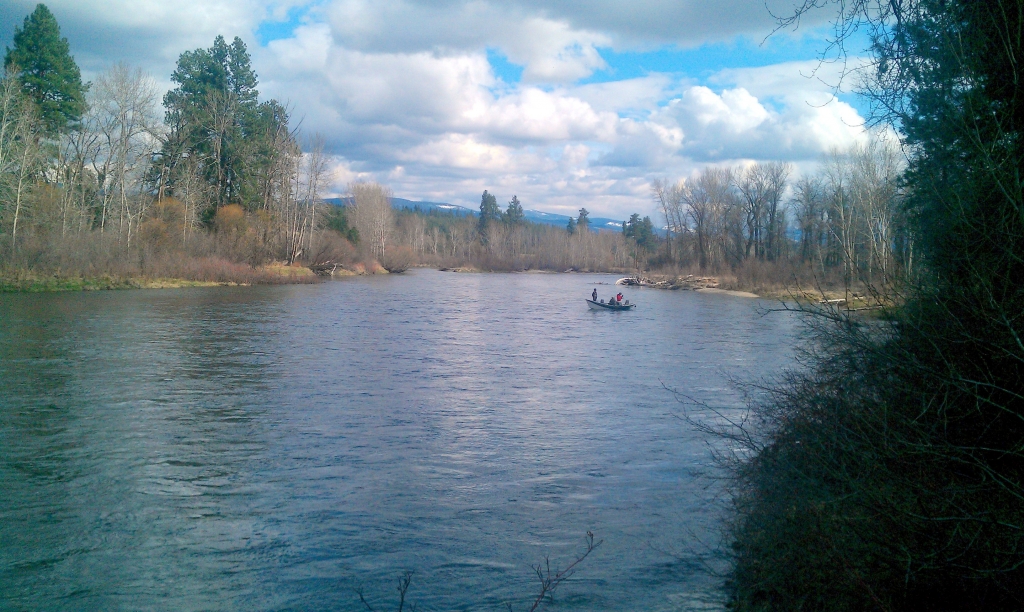
Montana Fly Fishing Bitterroot High Water Games
Since The Hunger Games is such a craze right now, I thought writing about the Fly Fishing Montana high water games would be the theme. I can tell you this, Flyfishing the Bitterroot River during these flows is a challenge and a great contest. I did catch some nice trout during the blow out from the heat, but it wasn’t pretty. I had to use the worm for the first time this year since I really don’t use that stupid thing unless I have to and I did. There were sticks and logs floating down the river and I had to concentrate on spots like back eddies and seams that had trout looking for respite from the powerful waters of a rising river. Lots of guides use what some are calling the turd and worm rigs which is basically a stonefly pattern with a worm. They certainly work, but I would much rather fish a dry fly or a streamer. Actually there was a day that I did great on skwalas and there were not many rising trout or bugs, but the trout were looking up. Some of my com padres were out there with the worm rigs and caught some trout along with many trees and whitefish, ughhh. So if you read my reports I will tell you that these rigs are popular and do work, but they are always in reports. So what do I think? The real challenge to me is catching a monster on a dry and trying different techniques and even experiment with some of your invented flies or patterns! (Other than the Worm!) Let the games begin!
What game do you want to play? If one wants to fish the Bitterroot at this time of year, you have to have a sense of adventure and respect the power of water. The levels are over 2000 cfs down by Florence and the morning temperatures are reading about 44 degrees. The upper river is certainly more popular right now because the flows are dropping and the conditions are great. I expect some very prolific Amaletus (Gray Drake) hatches on the middle and lower rivers these next couple weeks, as long as conditions remain stable. I have already seen the spinner fall of the drakes, but the real regatta can and will be any day!
So how do you approach your day on the water? I would start of with a skwala and a long over 30 inch dropper (probably prince, P-Tails, copper johns, and any other nymph that can replicate a Drake. I would also not be afraid to throw a Streamer. Experiment with colors, but I can tell you that yellow, light brown, black, and light olive are my favorites. Most people are used to working streamers deep or slow, but to me streamer fishing is second to dry fly fishing in the sense that I want to see the chase or explosion! That means I do what is called visual streamer fishing which requires a very active retrieve using stripping and the rod tip. Line control is always and issue when streamer fishing so continue to try and master the impossible! Try changing direction with your streamer with upstream and downstream mends because the predators love to attack a streamer that appears to be trying to elude death!
I will be going fishing this week and locate the right section, maybe even side channels, during the hatch. Keep your eyes open for large rainbows and browns rising when the drakes come out because even when the water is high, trout can’t resist these bugs that have large gray and black banded bodies. As I have stated in my previous reports, Skwalas will be around into May, so look to prospect with a Skwala if you are a dry fly fisherman like myself. Even if the fishing is slow, the results can be awesome for some of the biggest trout in the river. You can use 2x and 3x on the big dry and 3x and 4x on the Drake imitations depending on the conditions of the river. It’s not embarrassing to get skunked or not catch fish in these flows but keep researching the river that is changing daily and you might have some great fishing this week.
Good luck out there and I will always tell you that the river can be challenging to row and wade, so please use caution. The irrigation dams are dangerous and there are lots of hydraulics especially where 2 currents collide that have different speeds! I will keep you posted on my high water games! Over the years I have seen some of the largest browns in these spring windows!
April 11, 2012
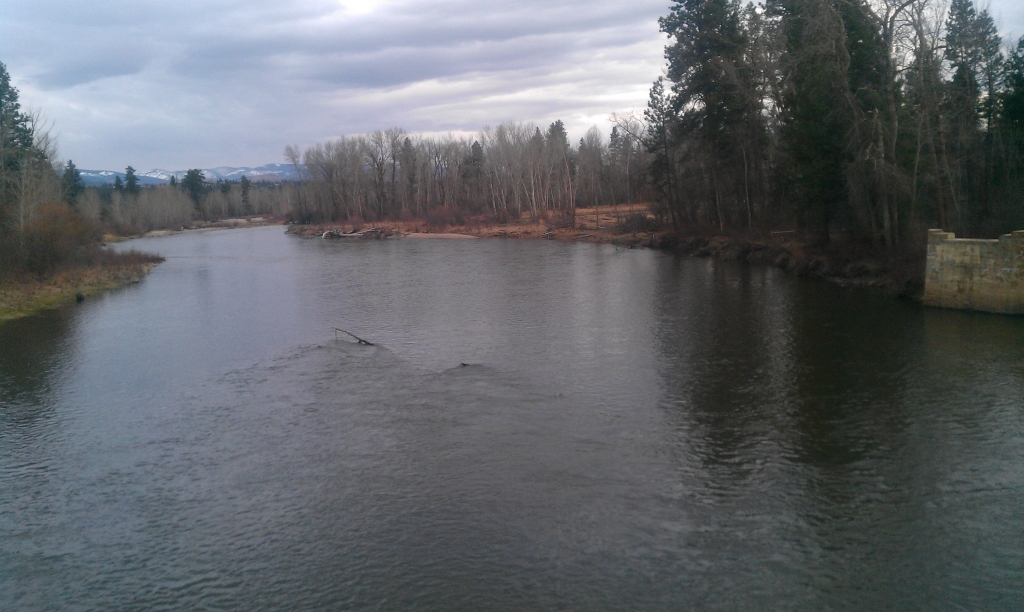
So what is going on on the Root? Well it has been fishing great. The river blew out last week, but the cold weather we had cleared the river up and the water conditions in the past few days have been great. The river is at a classic level for great conditions, side channels, hatches, and trout looking for dry flies. But now we have a problem. We have had near record heat for 2 days and the river is starting to show signs of another pulse. Will it blow the river? Well that depends on how much rain we get with this next storm. The temperatures are going to drop back to normal and conditions may be tough in the next few days as the river reacts to the heat. I will tell you this. I have been on the water for 21 years now and I have fished in a lot of vary difficult conditions during spring run off. I have had days where the river blows up and there is only 2 feet of visibility and there were monsters coming after dries in the muddy conditions. I know this seems crazy, but it is fishing and I thought I would let you know that you just can’t tell unless you throw yourself in the frying pan. As a general rule a rising river means trouble, but there are no absolutes and sometimes you just have to go for it. I have been seeing lots of skwalas, especially in the middle river and there are always a few March browns and baetis here and there. I seem to find the mayflies in the side channels more than the main river. You may hear people talking about a Gray Drake (Amaletus) hatch, but this hatch is not going on yet. I do see the occasional onr here and there, but I call these the early birds. The real Drake hatch will have them lined up like sailboats all over the water when the conditions are right. This does not happen until after mid April, but since we see some, the hatch is coming soon. The river will have to bump from this heat and I do think the next couple days might be tough, but the cool average temperatures will have the river fishing well by next week as soon as the cool nights shutdown the 70 degree melt. I have been using 3x in these big flows on my dry fly skwala patterns, but I have used 4x in certain mayfly scenarious that present themselves in certain areas. I am not a fan of 4x on skwalas during these bigger flows because clearly the trout are not leader shy. I have even been known to use 2x on dry flies when the flows get big. After all, there are some browns and rainbows over 2 feet long in the Bitterroot and if you happen to hook one of these elusive monsters, 4x usually doesn’t cut it with all the snags and structure for them to try and run towards. There are skwalas, nemouras, march browns, gray drakes, capnias, and baetis hatching. This means that the temperatures are definitely reaching over 46 and that trout are starting to even hit in some heavier currents. There are not many hitting in the faster water and most of the hits are in the classic slower banks and foam lines. But the fact that I ahve seen trout hitting in areas I would not expect, the fishing is heating up and changing every week. The rainbows and cutthroat are looking for spawning gravel in the main river and in the protected tributaries and trout migration is prolific. I have found some nice fish in channels that were not even there a couple weeks ago. Something that most fly fisherman don’t realize is that there is also a lot of aquatic insect migration in these flows now too. I will let you know how the fishing is during the rising conditions and I am hoping that the trout will still look for the dries and during the changing flows. I am not posting anything about worms or nymphing because that is just too basic to waist my time writing about. If you want to use a nymph rig, I would suggest looking for a big turn in the river. Floating and nymphing on the Bitterroot on these flows will usually require more time rigging for broken line on snags than fishing. Good luck out there, honor the power of the river, and be safe!
April 1, 2012
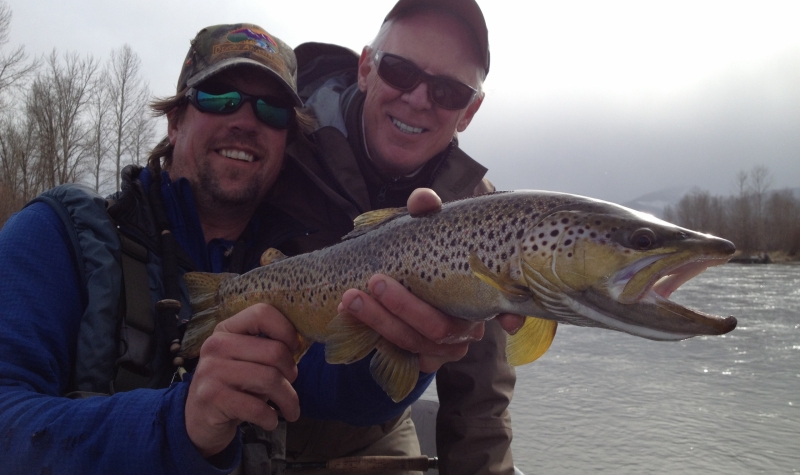
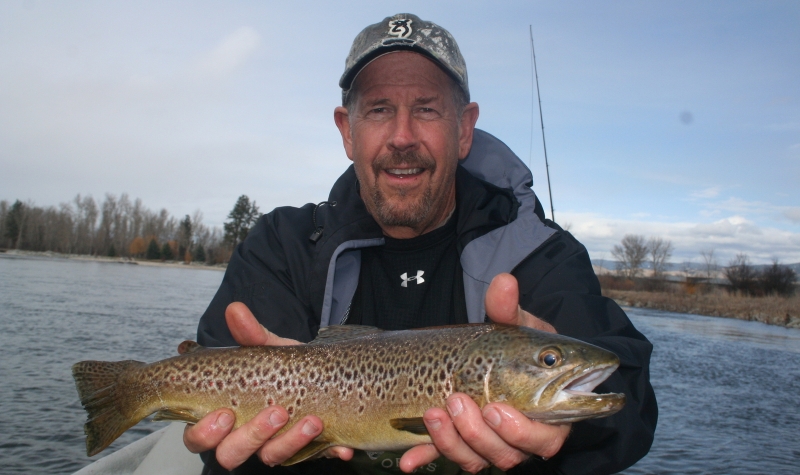
Well, the rain and the mild overnight temperatures have created our first low elevation blow out. I guided yesterday after a great day on Friday and it rained all night causing the first spring big bump in flows. I almost got hit by 2 logs and there was a lot of debris on the water and in eddys. There was a lot of sediment in the water that I could hear on the bottom of my driftboat. I basically got skunked because my guys did not want to fish the worm and ugly rigs which was fine with me. So now what? Well you can put on your adventure cap and just go out and throw streamers, nymph rigs, and look for risers in the back waters and springs, but it’s not looking good for now. Generally the fishing in springs is not happening in the early spring, but you never know what you might discover on an adventure with low expectations.
This can be an exciting spring fishing phenomenon. The graphs on the stream flow gauges have shifted from their low water cfs lines to the bigger cfs numbers. This will change the appearance of the graph compared to the graph from 2 days ago. Since the y axis numbers change the gradient of the graph will change how to read it. All the gauges are reading steep gradients and appearing to taper off today with the cooler weather and the surface run off from rain diminishing. There is still some visibility in the river, so its not like you absolutely can’t catch trout. You just have to get junky and see what happens. The equivalent of junky is nymphs, worm rigs and streamers. The cooling temperatures might stabilize the river by mid week and the clarity will improve. I know there were more skwalas on the water than I saw on my good dry fly fishing on Friday, but I saw a lot of bugs yesterday! Obviously the trout were not interested because they were busy just adjusting to the increase in flows. When the river stabilizes then there will be some potentially good fishing, the fun spring fishing with bigger flows and more exploratory options. The stonefly Hatches right now are skwalas, nemouras, and capnias. The mayfly hatches are March Browns, Baetis, and the very beginning sitings of the Gray Drake (Amaletus). They are hatching more in warmer waters of side channels or the lower river.
WARNING: The Supply Ditch Diversion Dam between Woodside and Tucker is getting dangerous. This dam sank a lot of boats last year so use extreme caution in a driftboat, otherwise just portage your rafts.
March 30, 2012
So what is going on now with the water rising? Did you miss the good fishing? As I have stated below, the real skwala hatch has not even really kicked in. With the teaser sunny days getting some skwalas out and then the cooler days, stalling the hatch. I fished dries today and like most spring days it was tough earlier, but it actually fished pretty well. But I will tell you I was cranking on the oars through the middle sections and the river is gaining some power. You can see the clean rocks on the rivers edge as the water invades the exposed shorelines. I will tell you that although the river has more water, I like these levels. Do get out of the winter, low water mode this early is great. We were catching some nice trout, including these browns, on dries. Did I see a lot of skwalas? Nope, only 3. Nemouras? Nope, just a handful all day. March Browns? 2. So why was the fishing decent? I don’t know. It was not spectacular, but playin the right spots and being patient with your drifts got some cool takes. I will say this, most of the trout came out of foam lines, rock walls, and slower classic looking cutbank and log jams, but I saw something I did not expect. I saw a couple hits today in heavier water. Areas I have not expected or seen hits on in a while. This means that since water temperatures are mid 40s and higher, the trout are getting active. The rainbows and cuts are thinking about migrated to spawn and the river is developing side channels and more diverse options for trout. Their real estate just got bigger. The cool thing today in weather is that a lot of the rain that we were supposed to receive was evaporating before it hit the ground, so the surface water influx will be tame compared to a 1 or 2 inch rainstorm, those wreak havoc!
I was using a personal skwala on about a 9 foot 3x, but if the wind howls, I will cut that back to 7 feet. I did try a dropper in site specific areas so we were not hanging up in root balls all day. Droppers are a catch 22. You cant get tight to the structure with those droppers. If you want to try it, put the dropper on 4x behind the 3x dry so that when you snag you should just break off the dropper and then just keep fishing until you want to tie on another dropper. We did fine without them. Things are getting excited with some flow. Please make sure you know the river and know how to row, the Bitterroot gains noticeable power with even a 300-400 cfs increase. Good Luck! Tie up some creatures and go out and find that big boy!
March 27, 2012
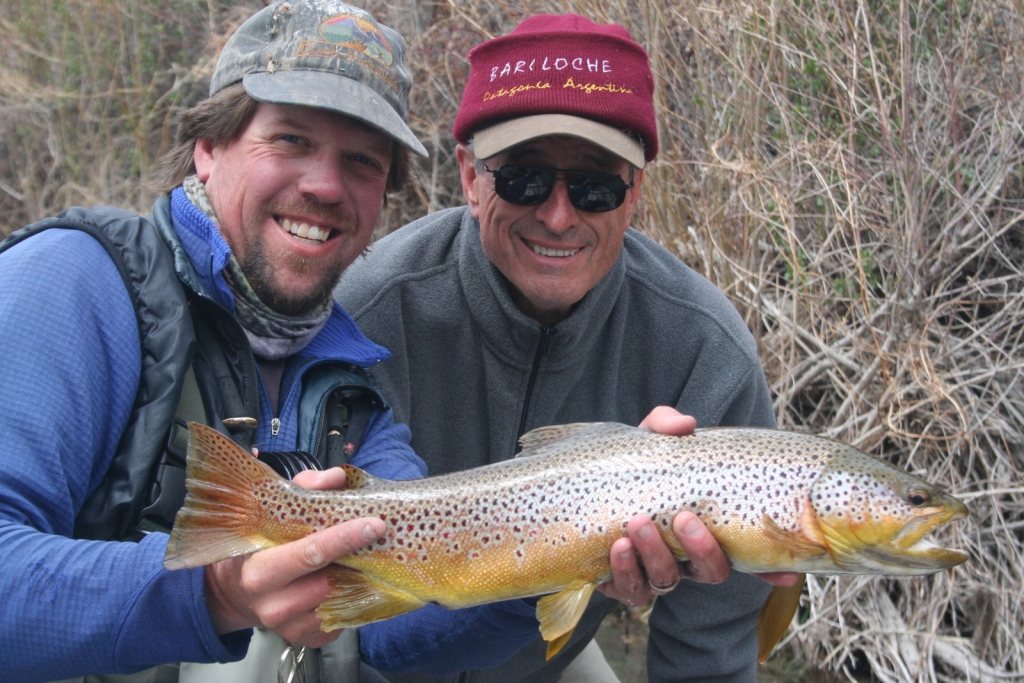
March 21, 2012

So today we had a snow storm in the morning, almost a white out and things looked pretty grim for those early spring fisherman. The wind was down in the afternoon and conditions were not too bad. The day never reached over 50 and there was probably some dry fly activity, but not much. Cold weather has an adverse effect on the strength of a stonefly hatch. The skwalas and nemoura stonefies have both anglers and trout wondering when they will be crawling on the water, but cool nights and cold mornings will cause the stones to go into a dormant phase. The temperatures simply are not conducive for active behavior, wing growing, and mating. I have seem cold weather do amazing dormancy magic to a full fledged salmon fly hatch. Bugs everywhere the day before and a cold front and you have a hard time even finding one the next day. Stoneflies can actually almost disappear and reappear with fluctuating temperatures. Since the skwala hatch has not developed very much the adult stone will be hard to find. So what does this mean if you are fishing. Well if I was fishing I love throwing dries and dreaming of a large brown hitting even if I don’t get a hit in an hour. But if you want to get after it you will have to go underneath and fend off the whitefish in order to find the trout. The streamer fishing may produce some action, but it also might not be very productive. The one thing in your favor is that the flows have bumped and that can cause trout to migrate and be territorial. 3x is fine on nymphs and skwala dries, but 4x might be required in side channels and site specific circumstances. If you are fishing streamers i would be confortable with 2x.
As for the photo above, I thought I would just give an example of how you can use tree shade to see into the water column on cloudy, stormy days. If you look closely you can see a rock ledge in the middle of the river and with good polarized glasses you can observe into the water if you are ever trying to locate trout and potentially sight fish. Look at the 2 windows I labelled and use them to your advantage on cloudy days, it will help you see trout and your fly. The river flows have me very excited about the spring fishing! Good Luck and I hope you enjoy my reports.
March 18, 2012
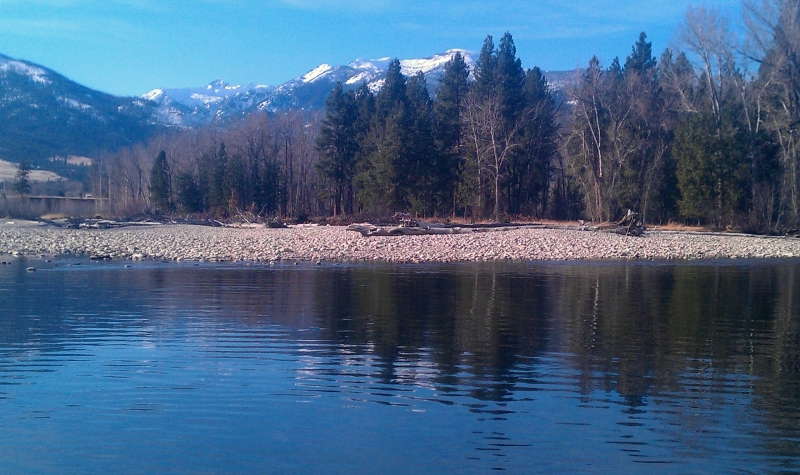
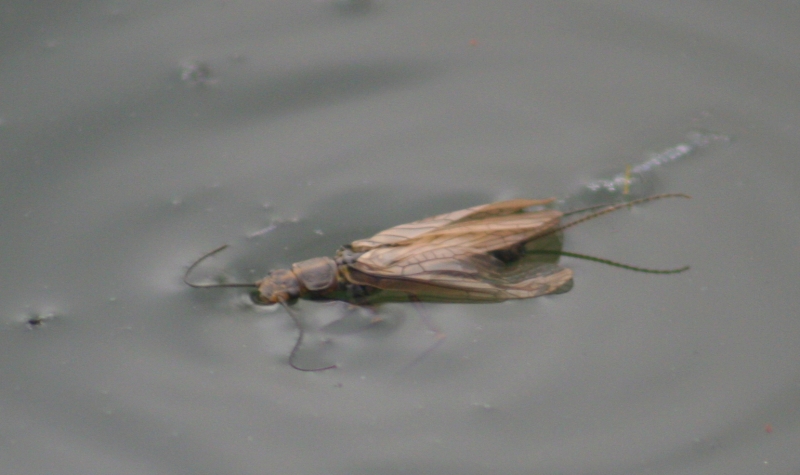
For those of you that actually view my reports, I am ready for a great season and I hope to provide you with the most honest and informative reports on our rivers. This report will be detailed. I am excited about this first report of the season because I will try and outline a spring fishing forecast that will help determine the conditions of the river, the status of the hatch, and the fishing (good or bad).
River Conditions
I have been fishing the middle and lower sections and I can tell you that as of last Thursday the fishing started to pick up, but is by no means good yet. Especially because we have had rain and snow in the last few days and precipitation is also in the forecast for this week. This is precisely what I like to see. The doldrums of the skinny flows and anxious anglers bombarding the river is always a sore sight for me to see during early spring fishing months. Now that there is a spike in the flows it does a few things to trout and also makes it more difficult for anglers to put pressure on the same holes. In the winter, some of the big trout hang out in the slow, deep water runs that barely move. When flows pick up it causes some of these trout to begin to migrate. The cutthroat and rainbows actually get triggered into realizing that it is time to migrate and fine good spawning gravel. The river is on the rise, but will stabilize and probably even drop depending on nightime temperatures. The graphs that are important to look at are the flows at Darby and at Bell Crossing. Whenever you look at these graphs, because the flows were so low, the influx can cause the graph to look steep even though they have only risen a few inches, so everything is relative. The Darby gauge shows that the river went from 350 CFS to 600 CFS a couple days ago and is already dropping. The middle river graph at Bell Crossing has done almost the same trend, rising from 550 CFS to almost 900 CFS and now it is stabilizing and dropping a little. Flows on the upper river tend to be diurnal (meaning they go up and down in a 24 hour period) and the lower river rises and lowers according to temperatures and precipitation. Now, if you look at the Missoula flows, there is a big difference. I am upset that the USGS site is discontinued at Florence, because the difference between Bell Crossing and Florence is huge. It is the dynamic of the difference between the lower river and the middle river! The Missoula flows show a rise from 1200 CFS to 1800 CFS and starting to level off today. Generally we like the river stable or dropping for the best fishing. I do pretty well on a rising river sometimes, but not until the hatch has developed and matured.
Fishing Report
So let’s get down to business. We all want to know if the skwala hatch is on. Well, there are some skwalas out and some trout looking for them, but the real hatch has not begun. The water temperatures are in the low to mid 40s and the fishing can get pretty good when the next warm up comes. I will be posting river temps when I take them since the USGS temperatures are not posted on our gauges at this time of year. I have floated a few days and the lower river below Stevinsville is tough for dry fly fishing and the skwalas are not really out. The majority of sitings of skwalas are in the Hamilton stretches and down to below Bell Crossing. After all to really understand the skwalas you must know that the hatch does not actually migrate upriver from the warmer lower sections like most stonefly hatches on freestone rivers. The stretches in Hamilton and down river are more abundant in stoneflies because they have better Stonefly habitat. Hamilton is known for being warmer than even Missoula and the hatch can develop earlier in these sections than other sections. Remember stoneflies are photophilic (love the sun). Skwalas, Nemouras, and Capnias all like warmth and that gets them into their nocturnal hatching modes. The most productive dry fly water are slow moving banks and foam holes behind stumps and rocks. They will not hit in the riffles until things warm up. Most fisherman and guides are being productive by trying to see if the skwala bite is on and throwing patterns like bullet heads, foam imitations, and stimulators to imitate the hatch. When the flows pick up like they are you can get away with 3x, but 4x is the typical choice. When flows really get big tippet size is not a factor and it is all presentation. The dry fly activity on these cold days will not happen until the early-late afternoon hours. When the temps were warm last week, Nemouras were actually starting to show themselves. Even though I do not resort to the San Juan Worm technique unless I am in muddier or bigger flows, there are lots of fisherman and guides who pretty much use them as a staple and feel naked without one on. They use them so much, if they did not they would feel like you do when you forget your cell phone. If you are going to nymph fish, I would use a double bead stone or Pat Stone and a copper john, prince, pheasant tail, or another stonefly pattern and run it on a 4-6 foot system.
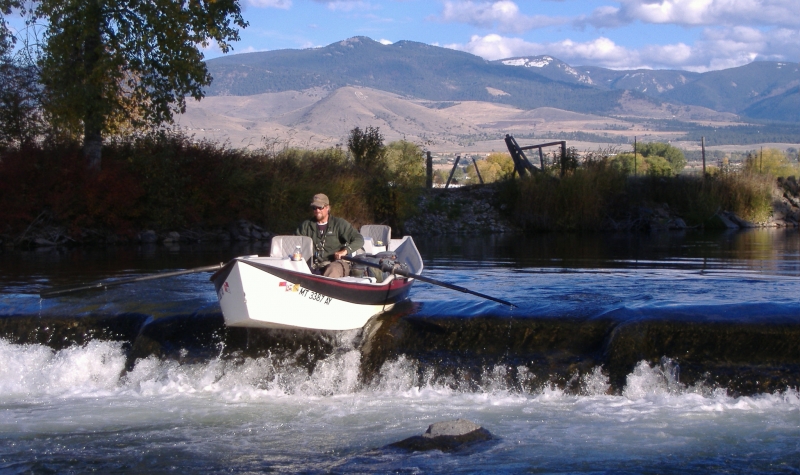
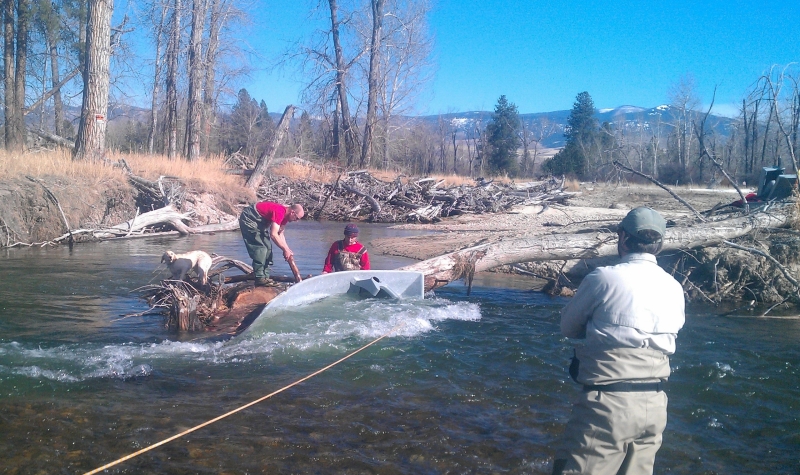
HATCHES
Skwalas, Nemoura, Capnia, Midges, and in the future are Blue-winged Olives and Gray Drakes
STREAMFLOWS